North Korea Military Drone Test: Kim Jong-un’s Focus on AI-Driven Defense Modernization & Tactical Attack Drones
Integration with Cyber Warfare
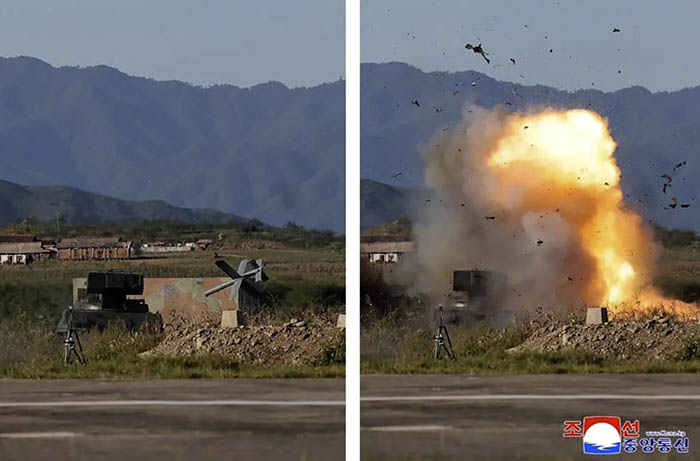
In 2025, North Korea is reportedly enhancing its drone fleet with integrated cyber capabilities. These cyber-enabled drones can potentially disrupt enemy communication networks, disable missile defense systems, or gather intelligence through hacking. Such hybrid tactics amplify North Korea’s asymmetric warfare strategies, making its drone fleet even more formidable.
Cyber and Electronic Warfare Synergy
The combination of AI-driven autonomous drones with cyber warfare tools allows for coordinated electronic attacks. For example, drones could target radar installations or electronic command centers while cyber operations disable or manipulate enemy systems remotely. This multi-layered approach increases North Korea’s capacity to conduct complex, coordinated assaults.
Drones as Force Multipliers in Regional Conflicts
With the deployment of AI-enabled attack drones, North Korea aims to operate as a force multiplier, complicating the defense calculations of neighboring countries. The ability to deploy drone swarms and autonomous attack units provides Pyongyang with a flexible, scalable deterrent that can be used in various conflict scenarios, from border skirmishes to larger regional confrontations.
Regional Alliances and Collaboration
South Korea, Japan, and the United States have intensified their military collaborations, including joint exercises focusing on drone interception, electronic warfare, and cyber defenses. These exercises aim to develop resilient strategies against North Korea’s evolving drone threat.
Arms Control and Regulatory Challenges
The rapid advancement of autonomous drone technology presents a challenge for international arms control efforts. Countries are calling for new treaties and regulations to prevent proliferation and misuse of AI-enabled autonomous weapons systems. Diplomatic negotiations are ongoing to establish norms for the responsible development and deployment of such advanced military technologies.
The Role of International Organizations
Organizations such as the United Nations are increasingly scrutinizing autonomous weapons, emphasizing the need for transparency and accountability. Monitoring mechanisms are being discussed to prevent the misuse of AI-driven drones and to ensure compliance with international humanitarian laws.
September 19, 2025 | 8:46 pmMore stories

Kylie Jenner Makes Victoria’s Secret Fashion Show Debut in $50 Million Fantasy Bra
Introduction Babak Takhti is an Iranian writer, publisher and the only son of Gholamreza Takhti, the legendary Iranian freestyle wrestler … Continue reading ➝

Who Is Babak Takhti? Gholamreza Takhti’s Only Son, His Family, Career, and His Father’s Controversial Death
Introduction Babak Takhti is an Iranian writer, publisher and the only son of Gholamreza Takhti, the legendary Iranian freestyle wrestler … Continue reading ➝

Azita Hajian, Mehraveh Sharifinia and Melika Sharifinia Attend Cafe Soltan Private Screening at Megamall Cinema
Introduction The private screening of Cafe Soltan, the Iranian feature film directed by Mostafa Razagh-Karimi and produced by Morteza Razagh-Karimi, … Continue reading ➝

Bot (Bet) Movie: Hamid Nematollah’s Drama Holds Private Screening at Galleria Cinema Complex
Introduction The Iranian social drama Bot, also transliterated as Bet and associated with the English title Idol, has attracted attention … Continue reading ➝

10 Fascinating Stories About Most Famous Actresses: Behind-the-Scenes Secrets From Iconic Films and TV Shows
Introduction 1. Gohar Kheirandish in Banoo: The Makeup That Could Not Hide Her Beauty Film: Banoo (The Lady) Director: Dariush … Continue reading ➝