The First Seconds of Occupation: Niavaran Palace Under the Shadow of Revolution
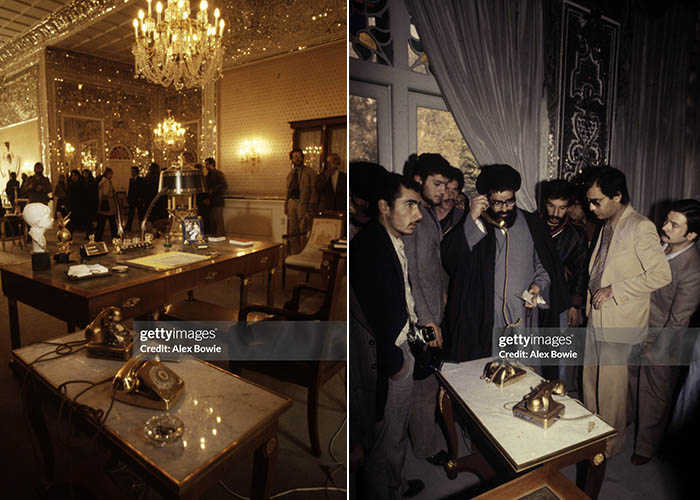
The Transition of Power: From Opulence to Revolution
The Mullah at the Shah’s Desk
In the quiet moments following the initial invasion, a mullah—an Islamic cleric—approached the Shah’s desk. The desk, once a command center for Iran’s ruler, was now a site of symbolic transition. The mullah sat, reverently, perhaps contemplating the fate of a regime that had long been challenged by religious and popular forces.
His gaze fell upon the gold telephones, the portraits, and the documents strewn across the desk. For him, this moment represented a spiritual and political turning point. The old order was giving way to a new era—one rooted in religious authority and revolutionary ideals.
The Revolutionary Guard’s Vigil
Outside the main chambers, revolutionary guards maintained a watchful presence. The Green Palace, part of the Niavaran complex, was a strategic point—its walls bearing witness to the upheaval. An armed guard, clad in fatigues, stood outside, eyes alert, embodying the new power asserting control.
Their presence was both a physical assertion of dominance and a psychological message: the old regime had fallen, and the new order was here to stay.
September 26, 2025 | 4:00 pm