Mojtaba Moharrami: The Football Legend and His Controversial Shah Pahlavi Signature Tattoo
Personal Life, Struggles, and Reflections
From Fame to Personal Challenges
Beyond his athletic achievements, Mojtaba Moharrami’s personal life has been marked by struggles and challenges. His journey from a celebrated football star to a controversial figure has been tumultuous.
In his own words, Moharrami has spoken about falling into vice during difficult times, including smoking, gambling, and substance abuse, especially after facing career setbacks and personal hardships. His candid reflections reveal a man seeking redemption and understanding amid complex personal and societal issues.
Addiction and Personal Growth
Moharrami admits to having become addicted at age 27, after experiencing a period of depression and social rejection. His confession sheds light on the darker aspects of fame and the importance of personal resilience.
Despite these struggles, he has expressed hope for redemption and a desire to be understood beyond his controversies. His story resonates with many Iranians who have faced similar struggles.
Cultural and Political Context in Iran
The Role of Symbols and Tattoos in Iranian Society
In Iran, tattoos are often considered taboo, associated with Western culture or rebellious youth. Displaying tattoos publicly can be controversial and sometimes even dangerous, depending on their symbolism.
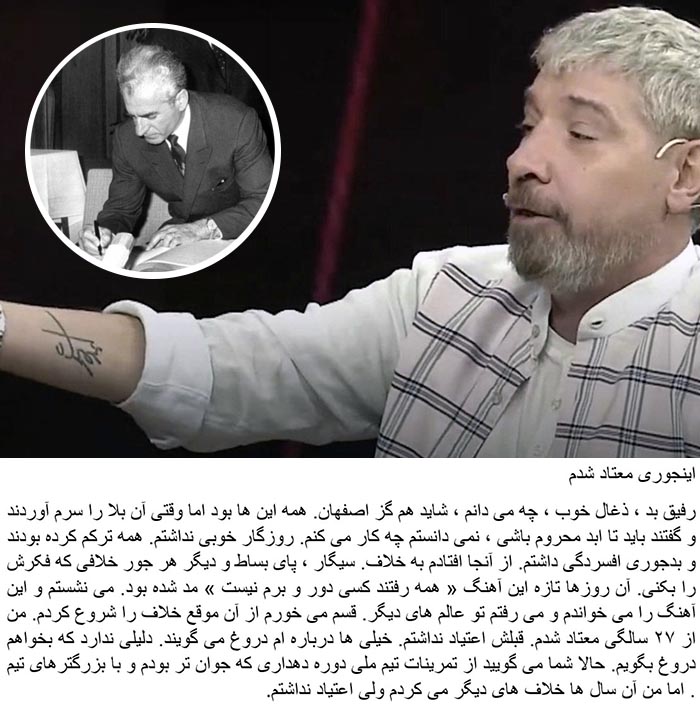
Moharrami’s tattoo of Mohammad Reza Shah Pahlavi’s signature challenges these norms, making a statement about personal beliefs and political identity. Such acts can evoke strong reactions, both positive and negative, reflecting Iran’s complex relationship with its history and politics.
The Legacy of the Shah and Contemporary Iranian Society
The legacy of Mohammad Reza Shah Pahlavi continues to influence Iranian society. While some view him as a modernizer and a symbol of national pride, others associate him with repression and authoritarian rule.
Moharrami’s tattoo becomes a visual representation of these divided perceptions, serving as a commentary on Iran’s ongoing dialogue about its past, present, and future.
Conclusion: A Controversial Mark in Iranian Sports and Society
Mojtaba Moharrami’s tattoo of Mohammad Reza Shah Pahlavi’s signature is more than just body art; it’s a symbol loaded with historical, political, and cultural significance. It challenges societal norms, sparks debate about personal freedom, and highlights Iran’s ongoing struggles with its identity.
As a former football star, Moharrami’s actions reflect a complex interplay of personal beliefs, national history, and social commentary. Whether seen as courageous or controversial, his tattoo has undeniably left a mark on public discourse and the cultural landscape of Iran.