Mojtaba Moharrami: The Football Legend and His Controversial Shah Pahlavi Signature Tattoo
The Significance of the Shah Pahlavi Signature Tattoo
A Symbol of Personal Beliefs and Political Statements
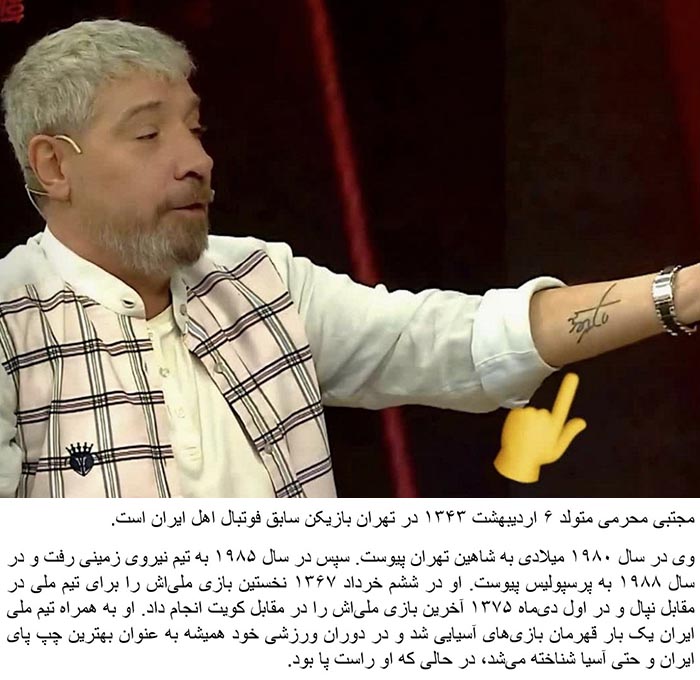
Recently, images of Mojtaba Moharrami’s hand tattoo have gone viral, revealing the signature of Mohammad Reza Shah Pahlavi, the last Shah of Iran. This tattoo has ignited intense discussions across social media platforms, with opinions divided sharply.
The Shah Pahlavi signature is a potent symbol in Iran’s history, representing the monarchy that was overthrown in the Iranian Revolution of 1979. For many, it signifies nationalism, historical pride, or personal admiration. For others, it is associated with opposition to the Islamic Republic and its political repression.
Cultural and Political Implications
In Iran, where political symbols are deeply intertwined with identity and ideology, such a tattoo is highly provocative. It raises questions about Moharrami’s personal beliefs, political stance, and possibly his stance on Iranian history and monarchy.
Some supporters interpret the tattoo as an act of remembrance, respect, or even a form of protest. Critics, however, see it as controversial and potentially provocative, especially given the current socio-political climate.
Historical Context of Mohammad Reza Shah Pahlavi in Iran
Mohammad Reza Shah Pahlavi ruled Iran from 1941 until 1979. His reign was marked by modernization efforts, but also by authoritarian rule, political repression, and widespread dissatisfaction that eventually led to the Islamic Revolution.
The Shah’s legacy remains complex; some view him as a modernizer who brought progress, while others condemn his authoritarian regime and the events leading to the revolution. The tattoo of his signature on Moharrami’s hand symbolizes this complicated history and personal connection.
Social Media Reactions and Public Discourse
Viral Images and Public Debate
The images of Mojtaba Moharrami’s tattoo quickly circulated on social media, eliciting a wide range of reactions. Supporters praised his boldness, calling it a symbol of patriotism or personal identity. Conversely, opponents criticized the tattoo as provocative or disrespectful, especially considering Iran’s sensitive political landscape.
Encouragement and Criticism from Fans and Critics
Many fans and social media users expressed encouragement and admiration for Moharrami’s bravery in displaying such a controversial symbol. Some interpreted it as a declaration of individual freedom and a nod to Iran’s complex history.
However, critics argued that the tattoo could harm his reputation and provoke unnecessary controversy. Some called for respect towards Iran’s current political system and expressed concern over the potential repercussions for Moharrami.
Impact on Public Perception and Cultural Dialogue
The controversy surrounding the tattoo has sparked broader conversations about personal expression, political symbolism, and freedom of speech in Iran. It reflects ongoing tensions between tradition and modernity, individual rights, and collective identity.