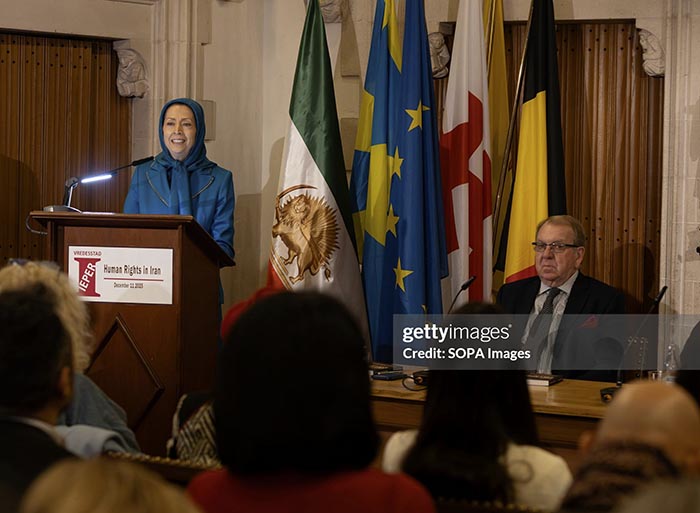
Maryam Rajavi Presents “Crime contre l’humanité” at Human Rights Meeting in Ieper
Cultural Diplomacy and Symbolic Acts
Participation in ceremonies such as the Last Post highlights the role of symbolic acts in diplomacy. These moments transcend political rhetoric, appealing to shared human values of mourning, respect, and remembrance.
Rajavi’s presence at such events reinforces her message that the fight for human rights is not confined to national borders but is a universal concern.
Public Engagement and Civil Society
Engagement with local communities, civil society organizations, and activists forms an essential component of Rajavi’s outreach. Public meetings provide platforms for dialogue, awareness, and mobilization.
In Ieper, the public human rights meeting served not only as a political event but also as an educational moment, connecting local history with global human rights issues.
Conclusion: Linking Past, Present, and Future
Maryam Rajavi’s visit to Ieper, Belgium, encapsulated the intersection of memory, justice, and hope. By presenting “Crime contre l’humanité” in a city defined by remembrance, she underscored the enduring relevance of confronting injustice wherever it occurs.
Her role as President-elect of the NCRI positions her as a key international advocate for democratic change in Iran. Through sustained human rights advocacy, international engagement, and symbolic acts of solidarity, Rajavi continues to frame Iran’s struggle within a global narrative of dignity and accountability.
The event in Ieper reinforced a central message: remembrance is not merely about honoring the past, but about shaping a future where crimes against humanity are neither forgotten nor repeated.