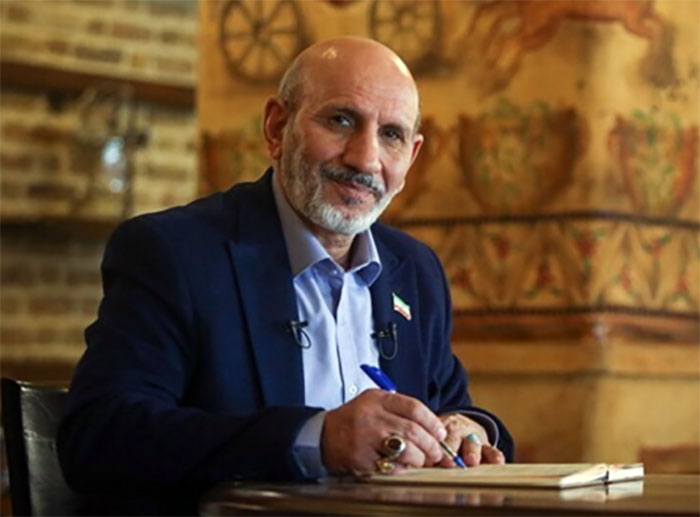
Nvidia CEO Jensen Huang and Alleged Chinese Spy

Final analysis
The reported relationship involving Jensen Huang and Alice Huang has become one of the most unusual stories surrounding the artificial intelligence industry.
The controversy combines a reported intelligence assessment, an acknowledged affair, a major semiconductor company, congressional scrutiny and the geopolitical competition between the United States and China.
Yet the most important questions remain factual.
Was Alice Huang recruited by Chinese intelligence?
If so, when and for what purpose?
Was Jensen Huang deliberately targeted?
Was any sensitive information requested?
Was any information actually disclosed?
Did Nvidia know about the alleged intelligence risk?
Were its security procedures sufficient?
Did any Nvidia trade secrets or national-security information become compromised?
Those questions cannot be answered simply by photographs, media reports or political statements.
They require evidence.
Nvidia’s independent investigation and potential congressional scrutiny could therefore become the most important next steps in determining what actually happened.
For Nvidia, the stakes are enormous.
The company is no longer simply a successful semiconductor business.
It is one of the central infrastructure providers of the global AI economy.
Its technology is connected to cloud computing, generative AI, advanced research, national-security policy and the increasingly intense competition between Washington and Beijing.
That makes executive security a strategic issue.
For Jensen Huang, the immediate challenge is both personal and institutional.
The acknowledgment of an affair addresses one part of the controversy, but it does not by itself resolve the separate questions concerning espionage and corporate security.
For Nvidia’s board, the priority is establishing whether the company’s information, customers, technology or national-security interests were actually exposed.
For US policymakers, the case illustrates the difficulty of protecting advanced AI technology in a globalized economy.
And for the wider technology industry, the story offers a warning: the security of critical technology companies cannot be separated entirely from the people who represent them.
The Nvidia controversy may therefore ultimately be remembered not simply as a story about an alleged spy, an AI billionaire or a reported affair.
It could become a case study in the new security environment surrounding artificial intelligence.
As the global AI race intensifies, the most valuable assets may increasingly be the chips, data, models, software, research and people capable of building the next generation of technology.
Protecting those assets will require more than cybersecurity.
It will require corporate governance, export-control compliance, executive security, supply-chain intelligence and careful management of international relationships.
And until the relevant investigations provide additional evidence, the central principle should remain clear: