Women Receive Military Training as Janfada Volunteers Train With Weapons
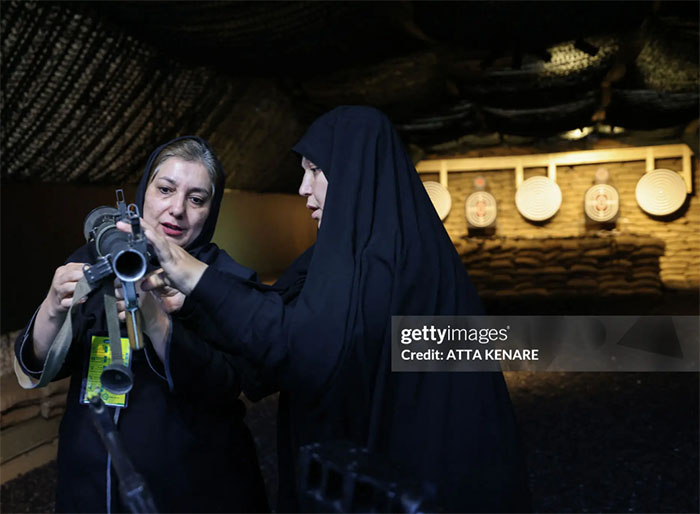
Women and Weapons Training in Iran
Women have occupied a complex position within Iran’s political, social and security structures for decades.
Iranian women participate in education, professional life, public institutions and numerous state-organized organizations. Women have also participated in volunteer and paramilitary organizations.
The Janfada training photographs place this participation within the context of the 2026 war.
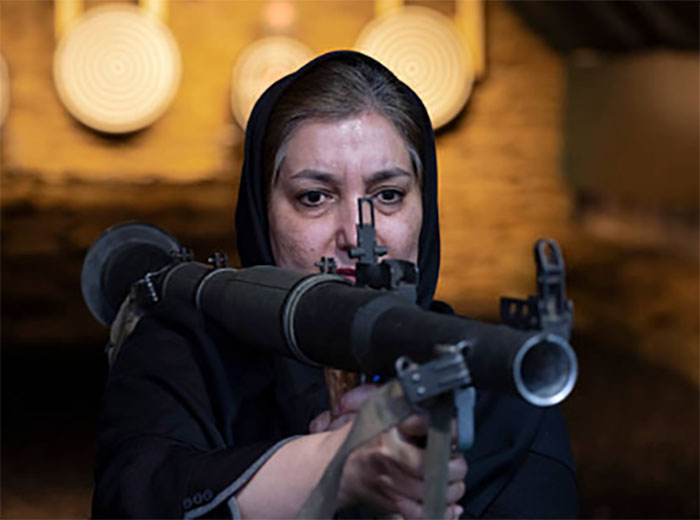
Instead of showing women only in humanitarian or support roles, the images show women receiving instruction involving military equipment.
This is one reason why the photographs have attracted attention from international news organizations and audiences.
The image of an Iranian woman with a rocket launcher is visually powerful because it challenges conventional expectations about gender and military participation.
It also fits into a broader wartime narrative in which governments seek to demonstrate that national defense is a responsibility shared across society.
For Iran, the public display of women participating in preparedness activities can communicate several messages simultaneously.
First, it can demonstrate national mobilization.
Second, it can suggest that the state expects civilian society to be prepared for the consequences of conflict.
Third, it can reinforce the idea that women have a role in defending the country.
Fourth, it can serve as a symbolic response to external military pressure.
The significance of the photographs therefore extends beyond the weapons themselves.
They are also images about gender, citizenship, national identity and wartime mobilization.
Military Training at Imam Hussein Square
The location of the training is another important aspect of the story.
The Janfada training facility was established at Imam Hussein Square in Tehran, transforming part of a major urban environment into a temporary military training area.
Military exercises are normally associated with bases, training grounds or controlled facilities outside densely populated areas.
The use of an urban square gives the training a different character.
It makes the exercises visible.
Residents and passersby can potentially see participants receiving military instruction, while photographs from the training can circulate widely through news organizations and social media.
This visibility can be particularly important during wartime.
Military preparedness is not only about physical capabilities. It can also involve communication and public messaging.
A temporary military training camp in a prominent Tehran location can communicate the idea that the country’s defense preparations are taking place throughout society rather than being confined to professional military institutions.
The location also makes the photographs immediately recognizable as scenes from Tehran.
Instead of an anonymous military facility, the images show military preparation against the backdrop of a major Iranian city.
That contrast is central to the visual impact of the story.