How to Stop Nail Biting: 12 Powerful Tips to Quit for Good
The Journey to Overcoming Nail Biting: Persistence and Patience
As you embark on the journey to quit nail biting, it’s important to acknowledge that breaking any habit requires time, effort, and a positive mindset. Habits like nail biting often develop over years, which means they won’t disappear overnight. The key to success lies in consistency and persistence.
The Psychological Aspect of Nail Biting
Understanding the psychological foundation of nail biting can help you overcome it more effectively. For many, nail biting is an unconscious behavior—a quick response to feelings of anxiety, boredom, or even excitement. To successfully quit, it’s crucial to become aware of when and why you bite your nails.
How Habits Form and Break
Nail biting, like any other habit, follows a cue-routine-reward loop. Here’s how it works:
- Cue (Trigger): This is the emotional or physical trigger that prompts the behavior. In the case of nail biting, the cue could be stress, boredom, or anxiety.
- Routine (The Habit): The routine is the nail biting itself. This action is triggered as a coping mechanism or automatic response.
- Reward (Satisfaction): After biting your nails, you might feel a momentary sense of relief or satisfaction. This creates a cycle that reinforces the behavior.
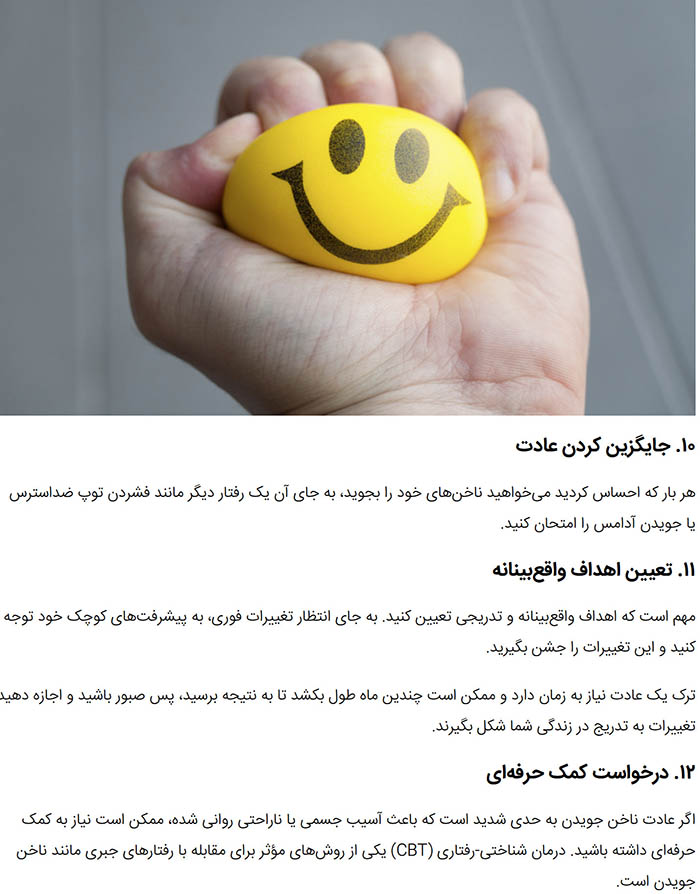
To break the habit of nail biting, you must identify the cues and rewards that drive the behavior. Once you’re aware of these, you can begin to replace the routine (nail biting) with a healthier alternative. For instance, if stress is the trigger, you could replace nail biting with deep breathing exercises or squeezing a stress ball.
Building New, Healthier Habits
While it may seem challenging to rewire your brain, it’s absolutely possible. Neuroplasticity—the brain’s ability to form new neural connections—enables you to break old habits and create new, healthier ones. To successfully quit nail biting, focus on building habits that support your goal, such as nail care, stress management, and mindful awareness.
The Power of Repetition
Repetition is key when building a new habit. Consistently practicing alternative behaviors, such as chewing gum or knitting when you feel the urge to bite your nails, will gradually replace the nail-biting habit. Remember, the more you practice these new behaviors, the more ingrained they become.
Reward Yourself for Progress
Another essential aspect of habit formation is rewarding yourself for small victories. As you make progress toward quitting nail biting, it’s important to acknowledge and celebrate your achievements. Positive reinforcement helps solidify the new habit, making it easier to maintain long-term.
For example, you can reward yourself with a manicure, new nail polish, or even a special treat when you meet your goals. Small rewards will motivate you to stay on track and remind you of the progress you’ve made.
October 24, 2024 | 6:44 pmMore stories

Nicki Minaj: Childhood, Real Name, Age, Family, Husband, Songs, Albums and Rise to Global Fame
Introduction Nicki Minaj biography: Nicki Minaj is one of the most recognizable female rappers in the world, celebrated for her … Continue reading ➝

Mohammad Javad Zarif and Abbas Araghchi Attend Ceremony Honoring Kamal Kharrazi in Tehran
Introduction A commemorative ceremony honoring Seyyed Kamal Kharrazi was held in Tehran, bringing together several prominent figures associated with Iran’s … Continue reading ➝

Sarah Shahi at the 2026 Emmy Awards: Red Carpet Appearance, Fashion Details and Shoe Close-Up
Introduction Sarah Shahi was among the celebrities photographed at the 78th Primetime Emmy Awards on September 14, 2026, in Los … Continue reading ➝

Sheida Yousefi: TV Shows, Noon Kh, Savushun and Personal Life
Introduction Sheida Yousefi is an Iranian actress known for her performances in television dramas, Iranian cinema and home video network … Continue reading ➝

Amir Taghi Brings Heritage and Asiatic Cheetah Inspiration to Vogue’s 2026 Sustainable Fashion Challenge
a Introduction Iranian-American fashion designer Amir Taghi has brought Iranian cultural heritage into the international fashion conversation through a striking … Continue reading ➝