Donald Trump Mask in Tehran: Actor Appears in Mock Prison Cell at Tajrish Square
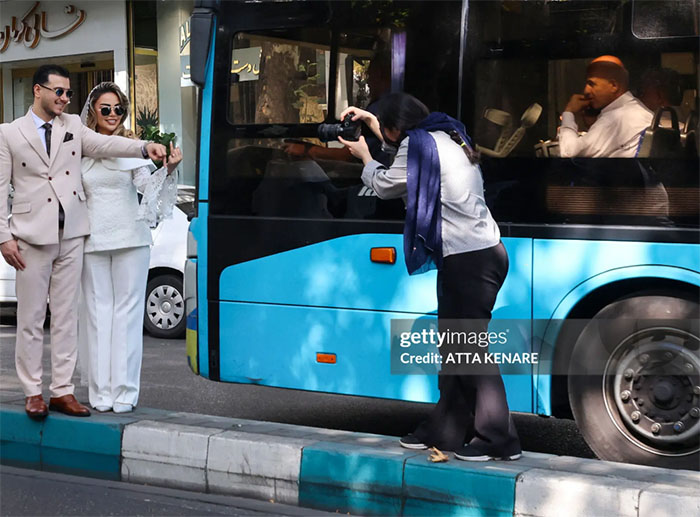
The role of photojournalism
The images are credited to Atta Kenare, an AFP photographer whose work was distributed through Getty Images.
Photojournalism provides a visual record of events that can complement written reporting. A photograph can show the physical details of an installation more directly than a verbal description alone.
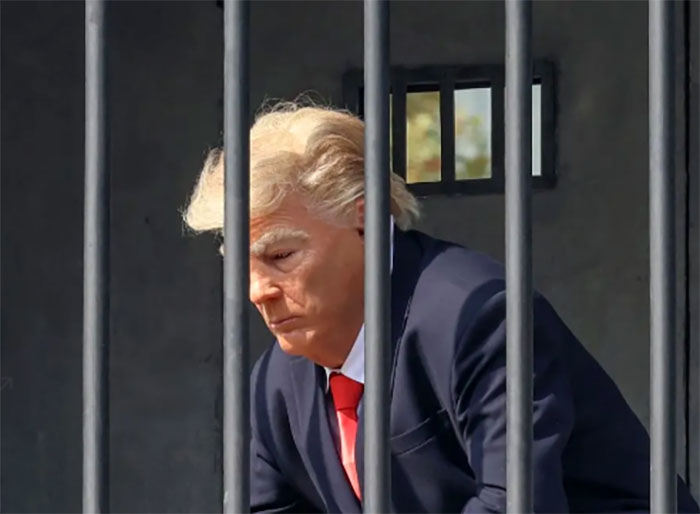
In this case, the images document how the actor and mock prison cell appeared within the streetscape of Tehran on October 21, 2026.
The photographer’s caption also supplies essential context by identifying the location, date, subject and staged nature of the scene.
Without that context, viewers might misinterpret the image or fail to understand why it was created.
For publishers and readers, accurate captions are therefore an important part of responsible visual storytelling.
Political Satire in Iran: Using Humor and Exaggeration to Communicate
Political satire uses humor, irony, parody and exaggeration to comment on people in positions of authority or on political institutions.
It often relies on recognizable symbols and familiar public figures. The audience must be able to identify the target before it can understand the intended contrast or joke.
The Tehran installation uses an uncomplicated visual premise: an actor representing the American president appears to be imprisoned.
The contrast between the status of a president and the appearance of a prisoner creates the satirical effect.
The image does not require a long written argument to communicate that the display is critical of the figure being portrayed.
Why political satire uses recognizable leaders
A recognizable leader offers a convenient visual reference point for a broad audience.
Political debates often involve complex institutions, negotiations and historical disputes. A leader’s face can make those larger issues easier to represent in a single composition.
The figure becomes a symbol through which the creator communicates a broader political perspective.
That does not mean the leader represents every aspect of the dispute, or that all viewers will interpret the image identically. It means the person provides a familiar starting point for the visual message.
In this case, Donald Trump’s likeness connects the installation to the American presidency and the relationship between Washington and Tehran.
October 21, 2026 | 2:15 pmMore stories
Eshgh-e Abadi Controversy: Shahrzad Report Raises Serious Questions About Reality TV
a Introduction The reality show Eshgh-e Abadi (Eternal Love Camp) has attracted attention following a report published by the Twitter … Continue reading ➝
Donald Trump Mask in Tehran: Actor Appears in Mock Prison Cell at Tajrish Square
a Introduction An unusual street installation featuring an Iranian actor wearing a mask depicting US President Donald Trump has attracted … Continue reading ➝
Sam Asghari and Brooke Irwin Star in New Photoshoot: Inside the Model’s Latest Editorial Feature
Introduction Sam Asghari, the Iranian-American model and actor known for his work in fashion, entertainment, and fitness, has appeared in … Continue reading ➝
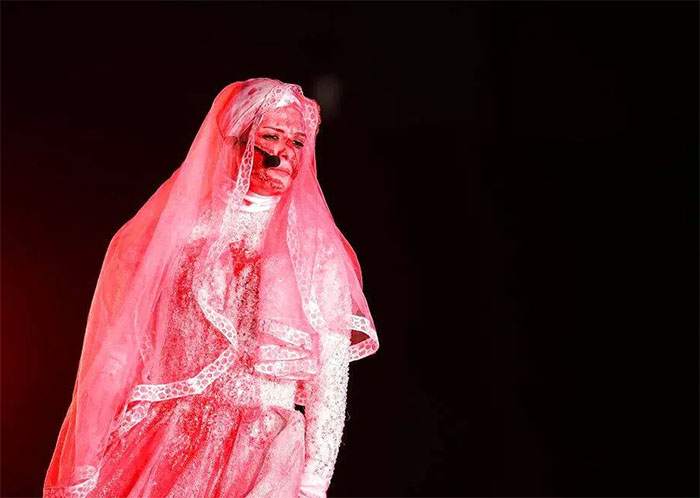
An Unusual Wedding Ceremony in Tehran Becomes a Memorial for the Victims of the Kohestak, Sirik Tragedy
Introduction The streets of Tehran have become the setting for an unusual and emotionally charged public event: a wedding-themed installation … Continue reading ➝
Kylie Jenner Makes Victoria’s Secret Fashion Show Debut in $50 Million Fantasy Bra
Introduction Babak Takhti is an Iranian writer, publisher and the only son of Gholamreza Takhti, the legendary Iranian freestyle wrestler … Continue reading ➝