Celebrating 60 Years of the People’s Mojahedin Organization with Maryam Rajavi and Mike Pence in Brussels
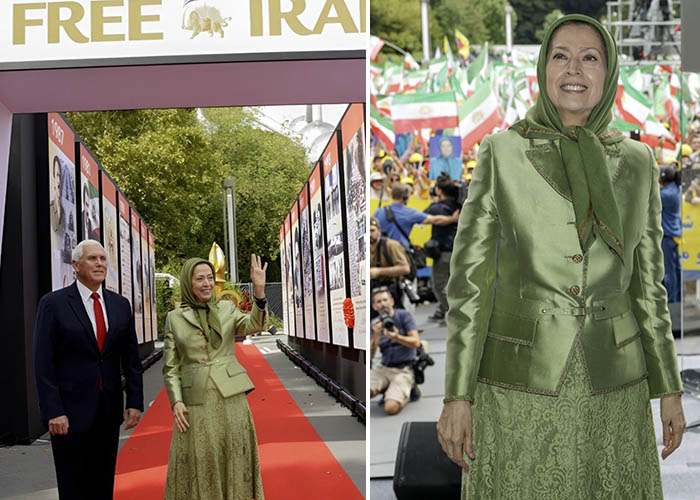
The MEK’s Evolution and International Exile
From Resistance to Controversy
Following the tumultuous early years after the 1979 revolution, the MEK’s opposition to the Islamic Republic of Iran intensified. The organization was involved in various armed confrontations, including attacks on government installations and military targets. The regime responded with brutal crackdowns, leading to mass arrests, executions, and exile of many MEK members.
By the mid-1980s, the MEK had relocated its operations primarily to Iraq, where it found refuge under Saddam Hussein’s regime. This alliance was driven by mutual strategic interests, as Saddam aimed to weaken Iran during its prolonged Iran-Iraq War (1980-1988). The MEK’s presence in Iraq became a defining aspect of its international identity, although it also drew criticism for its alliance with a brutal dictatorship.
The Role of the MEK in Exile Politics
During its exile in Iraq, the MEK developed a complex political structure, establishing bases in Camp Ashraf and later Camp Liberty. The organization continued its opposition activities, lobbying Western governments and international organizations to support regime change in Iran.
Despite being designated as a terrorist organization by the U.S. and other countries, the MEK gained support among some Western policymakers and human rights advocates, who viewed it as a viable alternative to the Iranian regime.
Transition to Democratic Ideals and Political Reforms
In recent years, under the leadership of Maryam Rajavi, the MEK has shifted its messaging towards advocating for democracy, gender equality, and human rights. The organization now emphasizes a vision of a secular, democratic Iran, with a focus on peaceful change rather than armed conflict.
September 6, 2025 | 5:29 pm