Assessing the Possibility of Iran Acquiring the Chengdu J-10C Fighter Jet
3. Technical Compatibility and Challenges
Potential Benefits for Iran
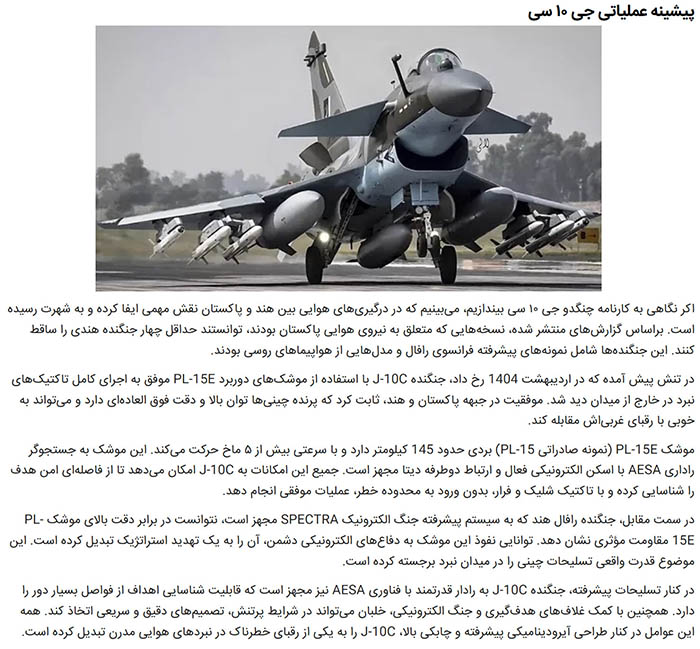
- Advanced Radar and Sensors: The AESA radar would significantly improve target acquisition and engagement capabilities.
- Multirole Flexibility: Ability to perform both air superiority and ground attack missions.
- Long-range Missiles: The PL-15 missile would expand Iran’s engagement envelope against adversaries.
Compatibility with Iran’s Existing Infrastructure
- Maintenance and Training: Iran would need to establish or upgrade maintenance facilities and train pilots and technicians to operate the J-10C effectively.
- Electronic Warfare and Integration: Compatibility with Iran’s electronic warfare systems and command infrastructure is critical.
- Weapon Integration: Ensuring the compatibility of Iranian and Chinese weapons systems is essential for operational effectiveness.
Challenges and Limitations
- Operational Range: The J-10C’s limited range without external fuel tanks could pose a significant operational challenge, especially in Iran’s vast theater of operations.
- Logistical Support: Establishing a supply chain for spare parts, maintenance, and upgrades would be essential.
- Training and Doctrine: Iran would need to develop new tactics and training programs specific to the J-10C’s capabilities.
Overcoming Limitations
Iran has a history of reverse engineering and modifying foreign aircraft to suit its needs. It could potentially develop or adapt external fuel tanks, electronic warfare pods, or other systems to mitigate range issues. However, such modifications require time, resources, and technological expertise.