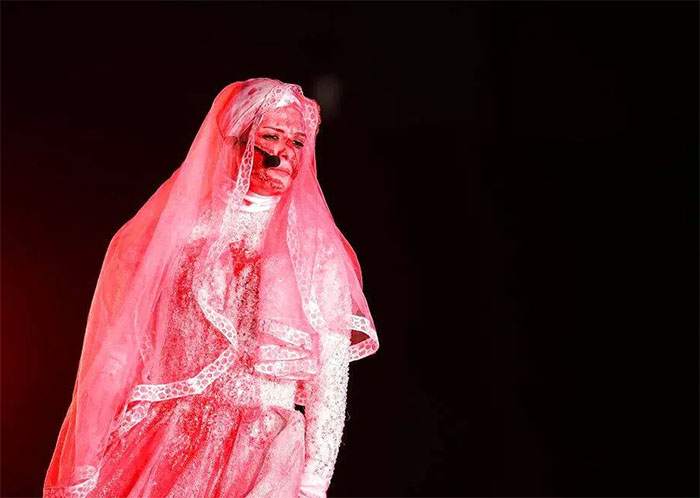
An Unusual Wedding Ceremony in Tehran Becomes a Memorial for the Victims of the Kohestak, Sirik Tragedy
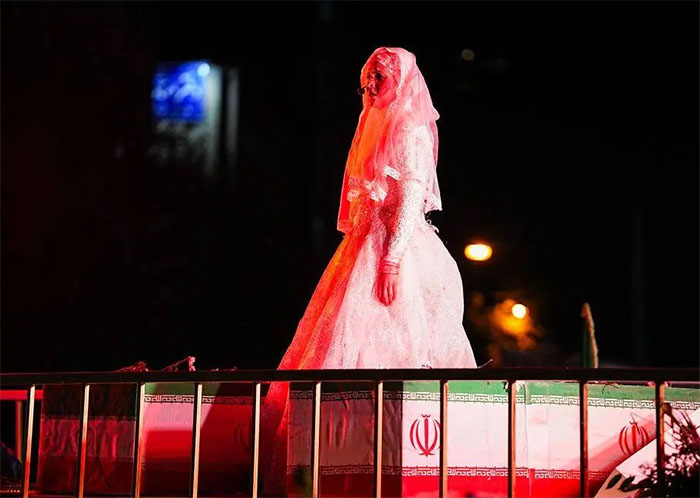
Why the Tehran Wedding Display Is Connected to the Kohestak, Sirik Tragedy
The reported connection to the wedding tragedy in Kohestak gives the Tehran event its central significance.
Kohestak is a coastal town in Sirik County, Hormozgan Province, in southern Iran. The area lies near the Strait of Hormuz, an important maritime passage connecting the Persian Gulf with the Gulf of Oman.
In September 2026, a wedding celebration in Kohestak was struck during a period of military operations in the region. Reports from international news organizations described damage to a residential compound where family members and guests had gathered for the celebration.
The incident caused civilian casualties and left numerous people injured. Iranian officials attributed the strike to the United States, while US military representatives said that the military does not target civilians. Subsequent reporting examined evidence from the scene, including damage to buildings and remnants of weapons.
Reuters published an investigation on September 3, 2026, reporting that weapons experts believed the explosion was likely caused by a direct hit from a US munition. The Associated Press and other international outlets also reported on the destruction and the impact on the affected families.
The incident has raised serious questions about civilian safety during military operations, the protection of family gatherings and the need for a thorough examination of strikes that cause civilian casualties.
For families attending a wedding, the setting is ordinarily associated with celebration rather than danger. The reported strike transformed an occasion intended to bring relatives and friends together into a scene of destruction and grief.
The Tehran installation takes this painful contrast as its reported point of reference. By recreating wedding imagery in a public setting, it brings attention to the difference between what a wedding represents and what happened in Kohestak.
The display does not replace a formal investigation, provide a complete account of the attack or independently establish responsibility. Instead, its reported memorial purpose is to draw public attention to the victims and the consequences of the incident.
For readers following Iran news, the event also illustrates how a local tragedy can become the subject of public remembrance far from the original location.
When a Wedding Celebration Turns Into a Tragedy
Weddings occupy an important place in family and community life. They bring together relatives, friends and neighbors to mark a major transition in the lives of two people.
In many communities, including those in southern Iran, wedding celebrations can involve extended families and guests of different ages. Preparing the venue, arranging food, welcoming relatives and organizing the festivities can require substantial effort from the families involved.
That context helps explain why reports of a wedding being struck during a military operation attracted such strong attention.
According to reporting published by The Associated Press and Reuters in September 2026, the strike in Kohestak damaged a residential location where a wedding celebration was taking place. The reports described deaths and injuries among civilians, including women and children.
The exact circumstances of the attack, including the intended target and the sequence of events, have been examined in subsequent reporting. Claims about the incident should therefore be distinguished from findings established through independent evidence.
Nevertheless, the reported civilian casualties illustrate the human consequences that military operations can have when residential areas are affected.
A wedding is not simply a decorated room or a collection of photographs. It is an event built around relationships, expectations and memories. When a celebration is interrupted by violence, the consequences extend beyond the physical damage to buildings.
Families may lose relatives. Survivors may experience serious injuries. People who attended the event may have to confront the loss of friends or family members. A community can also be left with difficult questions about how an ordinary gathering became the site of a deadly incident.
The memorial in Tehran brings these wider consequences into focus through the familiar imagery of a wedding.
The use of a wedding setting is especially significant because it preserves the original meaning of the occasion. Rather than presenting the event only through images of destruction, the installation invokes the celebration that the victims and their families had gathered to share.
The contrast encourages viewers to consider not only the circumstances of the attack but also the lives and relationships affected by it.
October 20, 2026 | 6:14 pm