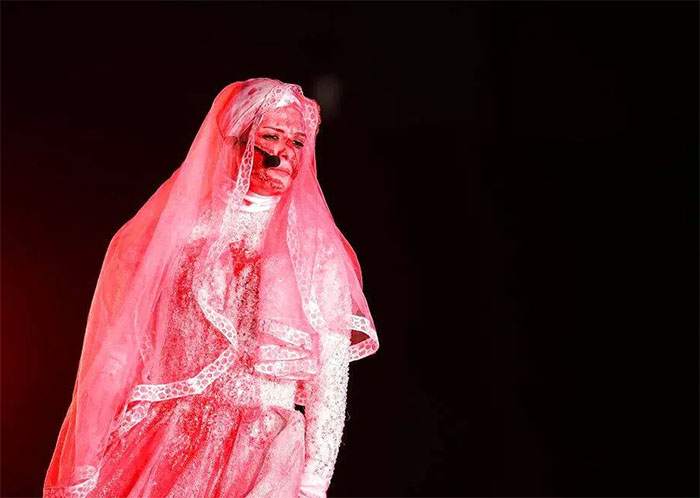
An Unusual Wedding Ceremony in Tehran Becomes a Memorial for the Victims of the Kohestak, Sirik Tragedy
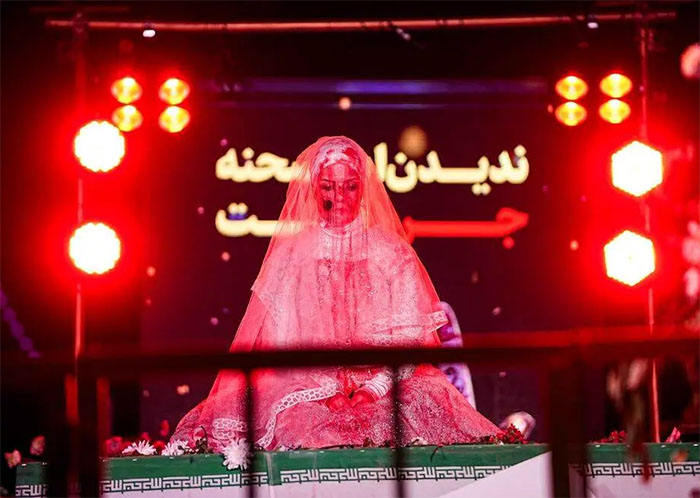
From a Local Tragedy to a National Conversation
Events that take place in smaller towns can become subjects of national discussion when their consequences reach beyond the immediate community.
Kohestak, located in southern Iran, is geographically distant from Tehran. Yet the reported wedding tragedy has become relevant to public discussion in the capital through the memorial display.
This relationship between local events and national attention is a familiar feature of modern news coverage.
A tragedy may first be reported through local accounts, official statements or images shared by people close to the incident. International organizations may then investigate the circumstances, while public figures and community groups respond in different ways.
A memorial display in another city can become part of this process by making the event visible in a new setting.
The Tehran installation connects a specific location in Hormozgan Province with the everyday urban environment of the capital. It offers a visual reminder that the consequences of an incident are not necessarily confined to the place where it occurred.
For families and communities affected by civilian casualties, public recognition may be important because it helps ensure that the people involved are not reduced to statistics.
At the same time, a responsible account should avoid claiming that every resident of Tehran or every Iranian citizen shares the same interpretation of the display. Public reactions may vary, and evidence of those reactions should come from interviews, documented statements or other reliable sources.
What can be established from the event’s description is that the installation uses an unusual public presentation to draw attention to the victims of a tragedy in southern Iran.
This is sufficient to explain why the display is newsworthy without overstating its reach or impact.
How the Tehran Wedding Display Differs From a Traditional Wedding
Traditional weddings generally have a clear purpose: to celebrate a marriage and bring together people who wish to share the occasion with the couple.
Their design and organization vary widely. Some ceremonies are elaborate, with extensive decorations and carefully planned photography. Others are smaller gatherings shaped by personal preference, family traditions or financial circumstances.
The Tehran display differs in several important respects.
First, it is presented in a public urban setting rather than a conventional private wedding venue. Second, it uses a semi-trailer truck as its platform. Third, its reported purpose is memorial rather than simply celebratory.
These differences change the way the display should be interpreted.
In an ordinary wedding, decorations are usually intended to create an atmosphere of celebration. In a memorial context, similar visual elements can become symbols of memory and loss.
The presence of a wedding theme does not necessarily mean that a couple is getting married at the location. The supplied description identifies the display as an unconventional ceremony connected to remembrance, so coverage should avoid presenting it as a conventional marriage event unless additional evidence confirms that interpretation.
This distinction is particularly important for photo captions and search results, where a brief description may be the only context a reader sees.
A headline that refers to an unusual wedding ceremony can attract attention, but the accompanying description should quickly explain its reported memorial purpose.
That approach gives readers a more complete understanding of the scene and avoids creating a misleading impression.