A Tour of Persia: Rare 1969 GQ Photos Show American Models Exploring, Fashion and Life
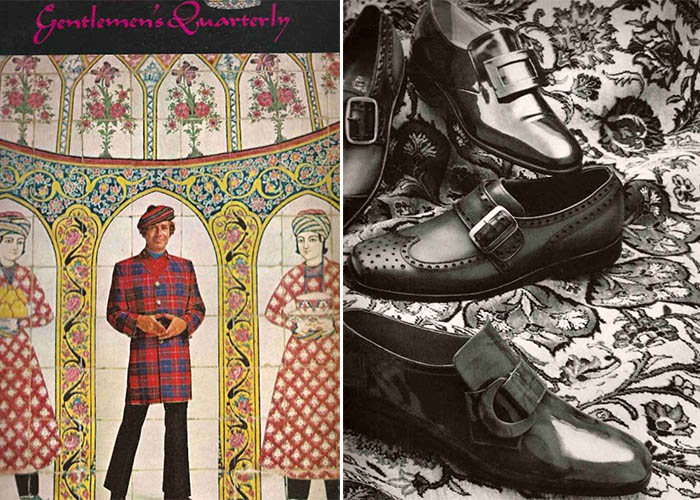
Iran in 1969: A Country Between Tradition and Modernity
To understand the photographs, it is necessary to understand the Iran in which they were taken.
In 1969, Iran was ruled by Mohammad Reza Shah Pahlavi. His government had pursued an ambitious modernization program, particularly after the White Revolution, a series of reforms launched in the 1960s.
The period saw major investment in infrastructure, education, industrial development and urban modernization.
Tehran was becoming increasingly metropolitan. New roads, buildings, universities, hotels and commercial districts reflected a country attempting to position itself as a modern regional power.
At the same time, Iran’s cultural landscape was far older than the modern state.
Persian civilization had developed over thousands of years, leaving behind archaeological sites, palaces, mosques, gardens and historic cities across the country.
Cities such as Tehran, Isfahan and Shiraz offered dramatically different environments.
Shiraz, in particular, was strongly associated with Persian poetry, gardens and the history of the ancient Persian world.
The nearby ruins of Persepolis connected contemporary Iran with the Achaemenid Empire, while the city’s gardens represented another important dimension of Persian cultural heritage.
For a fashion photographer, this provided extraordinary visual possibilities.
A Western fashion ensemble could be photographed against a Persian garden.
A modern dress could be contrasted with centuries-old architecture.
American models could appear in an environment that was simultaneously historic and contemporary.
That contrast is one of the defining characteristics of the 1969 photographs.
Leonardo Nuñez and the Photography of the Journey
The photographs from the feature are credited to Leonardo Nuñez.
The role of the photographer was especially important in magazine features of this period.
Unlike today’s digital environment, where travelers can publish thousands of photographs instantly, a major magazine photo essay involved extensive planning, location selection, styling and editing.
Every published image had to contribute to the story.
The photographer therefore had to do more than document a location. He had to create a visual narrative.
In the case of “A Tour of Iran,” the models become a recurring visual element connecting different locations.
They provide continuity.
The viewer recognizes the same travelers moving from one environment to another.
The technique resembles a fashion travel diary.
Instead of simply showing a monument, the photographs ask the viewer to imagine what it would have been like to travel through Iran while wearing the latest Western fashions.
That makes the feature particularly interesting from the perspective of fashion history.
September 20, 2026 | 6:27 pm