Mojtaba Moharrami: The Football Legend and His Controversial Shah Pahlavi Signature Tattoo
Introduction
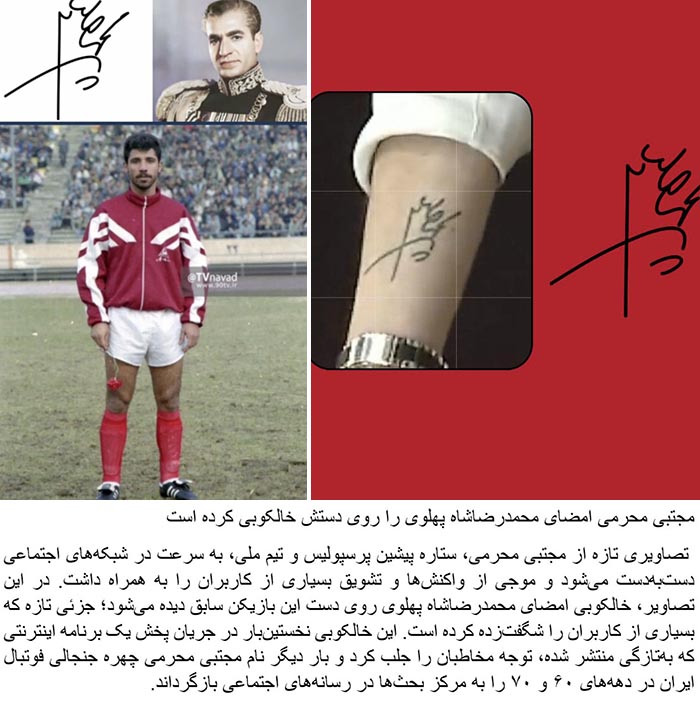
Mojtaba Moharrami, renowned former Iranian football star, has recently become the center of social media buzz and public discourse after images surfaced revealing a striking tattoo of Mohammad Reza Shah Pahlavi’s signature on his hand. This revelation has ignited a wave of reactions, debates, and curiosity among fans, critics, and the general public alike.
In this comprehensive article, we delve into the life and career of Mojtaba Moharrami, exploring his journey from a talented footballer to a controversial figure marked by his tattoos and outspoken personality. We analyze the significance of his tattoo, its cultural implications, and how it reflects his personal beliefs and identity within the complex socio-political landscape of Iran.
Early Life and Football Career of Mojtaba Moharrami
Born and Raised in Tehran: A Footballer’s Beginnings
Mojtaba Moharrami was born on May 26, 1964, in Tehran, Iran. Growing up in the bustling capital, he developed an early passion for football, showcasing exceptional talent as a left-footed player. His journey into professional football began at a young age, driven by a desire to excel and make a name for himself on the national stage.
Rise to Prominence: From Shahin Tehran to Persepolis
Moharrami’s football journey started with Shahin Tehran in 1980, where he quickly gained attention for his skillful play and agility. His dedication and talent earned him a spot in the Iranian national team in 1988, marking the beginning of his international career.
In 1985, he joined the Ground Forces team, a prominent club in Iran, further honing his abilities. The pinnacle of his club career came when he joined Persepolis in 1988, one of Iran’s most successful and popular football clubs. His contributions to Persepolis helped solidify his reputation as one of Iran’s best left-footed players.
International Career and Achievements
Mojtaba Moharrami made his debut for the Iranian national team on June 28, 1988, in a match against Nepal. Over his international career, he earned recognition for his skill, agility, and strategic play. His last appearance for Iran was on January 1, 1988, against Kuwait.
One of his most notable achievements was winning the Asian Games with Iran, a significant milestone that highlighted his impact on Asian football. Despite his success, his career was not without controversy, as his outspoken personality and personal beliefs often sparked debates.