Abbas Araghchi’s Daughter’s Birthday Controversy: The Viral Social Media Debacle and Its Impact on Diplomatic Image
Introduction
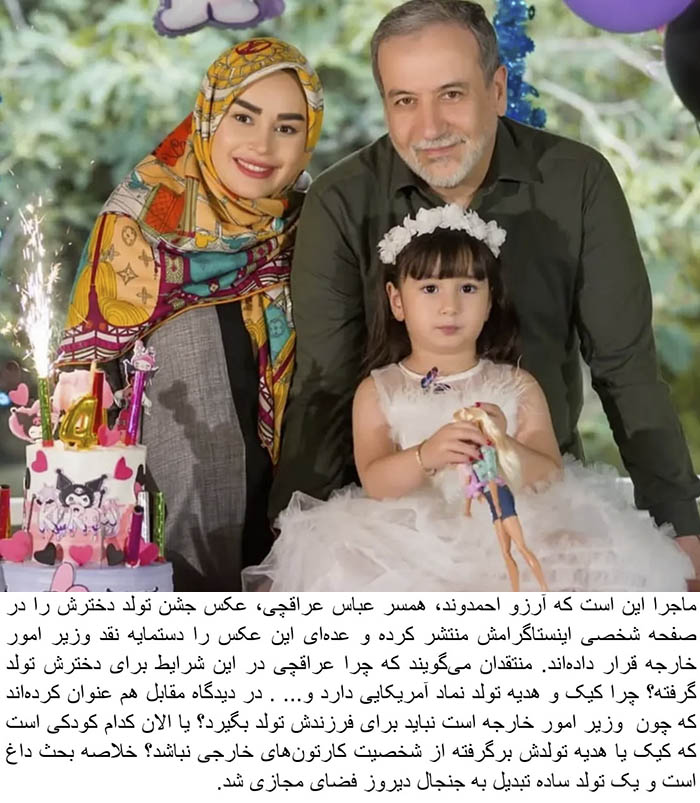
In recent days, a seemingly innocuous social media post has ignited a heated controversy across Iran and beyond. The photo of Seyyed Abbas Araghchi’s daughter’s birthday celebration, shared on his wife Arezo Ahmadvand’s personal Instagram account, has become the subject of intense scrutiny, criticism, and debate. The controversy revolves around the symbolism present in the birthday cake, gifts, and decorations—particularly the American symbols and cartoon characters—prompting questions about the appropriateness of celebrating a private event amid tense diplomatic relations between Iran and Western countries.
This article delves into the details of the controversy, analyzing the social media reactions, the political implications, and the broader debate about cultural expression, diplomatic sensitivities, and personal life of high-ranking Iranian officials. We also explore the role of digital media in shaping public opinion, the significance of social media controversies in Iran’s political landscape, and the impact on Iran’s foreign diplomacy.
1. The Background: Who is Abbas Araghchi?
1.1. Abbas Araghchi’s Role as Iran’s Top Diplomat
Abbas Araghchi, born in 1960, is a prominent Iranian diplomat and politician serving as Iran’s Deputy Foreign Minister and a key figure in the country’s nuclear negotiations. He has been instrumental in shaping Iran’s foreign policy, especially regarding the nuclear deal (JCPOA) and relations with Western countries. His diplomatic career spans decades, establishing him as one of Iran’s leading figures in foreign diplomacy.
1.2. The Personal Life of Abbas Araghchi
Despite his high-profile diplomatic role, Araghchi’s personal life has rarely been in the limelight. His family, especially his wife Arezo Ahmadvand and their children, have mostly maintained a private existence. The recent social media activity, however, has brought his family into the public eye, igniting debates about privacy, professionalism, and the responsibilities of public officials.
2. The Social Media Incident: Details of the Controversial Photo
2.1. The Facebook and Instagram Post
The controversy began when Arezo Ahmadvand posted a photo on her personal Instagram account showing her daughter’s birthday celebration. The image displayed a birthday cake decorated with American symbols, cartoon characters, and American flags, alongside gifts featuring Western cartoons and brands.
2.2. Public Reaction and Viral Spread
Within hours, the photo went viral on social media platforms like X (formerly Twitter), Telegram, and Instagram. Critics quickly reacted, questioning the appropriateness of such a celebration. Hashtags criticizing Araghchi and the celebration trend emerged, fueling debates on Iranian social media.
2.3. Key Elements in the Photo
- American Symbols: The birthday cake featured American flags, symbols, and popular cartoon characters like Mickey Mouse, which some interpreted as a sign of cultural insensitivity or disrespect amid tense diplomatic relations.
- Gifts and Decorations: The gifts included Western cartoons, toys, and branded items, sparking accusations of promoting foreign influence.
- Contextual Factors: The timing of the celebration amid ongoing sanctions, diplomatic tensions, and Iran’s anti-Western sentiments intensified the criticism.
3. The Criticisms and Arguments Against Araghchi’s Celebration
3.1. Why Celebrate a Child’s Birthday in Such Circumstances?
Critics argued that celebrating a birthday with American symbols during a period of diplomatic tension is inappropriate, disrespectful, and potentially undermines Iran’s national dignity. They emphasized that public officials should uphold national values and demonstrate cultural integrity.
3.2. The Political and Diplomatic Implications
Many viewed the celebration as a sign of cultural leniency or ignorance among Iranian elites, potentially damaging Iran’s image abroad. The criticism extended to the idea that personal life choices of diplomats can reflect on Iran’s diplomatic standing.
3.3. Cultural Sensitivity and National Identity
Some critics highlighted the importance of cultural sensitivity, especially in a country that faces ongoing sanctions and diplomatic challenges. They argued that such celebrations could be misinterpreted as endorsement of Western culture, which Iran often criticizes.
4. The Defense and Opposing Viewpoints
4.1. Personal Life and Parental Rights
Supporters of Araghchi and his family argued that celebrating a child’s birthday is a universal tradition and should be separated from diplomatic or political issues. They emphasized that children should not be subjected to political debates over their personal celebrations.
4.2. The Ubiquity of Western Cartoons and Toys
Many pointed out that Western cartoon characters and toys are ubiquitous worldwide, including Iran. They argued that it is unrealistic to expect Iranian children and families to avoid Western cultural influences entirely.
4.3. The Role of Social Media in Amplifying Minor Incidents
Some commentators believed that the controversy was exaggerated by social media, which often amplifies minor incidents into national debates. They warned against politicizing personal family matters, especially those involving children.