The Controversy Over Women’s Rights: The Case of Finnish Foreign Minister Elina Valtonen and Media Practices
Introduction
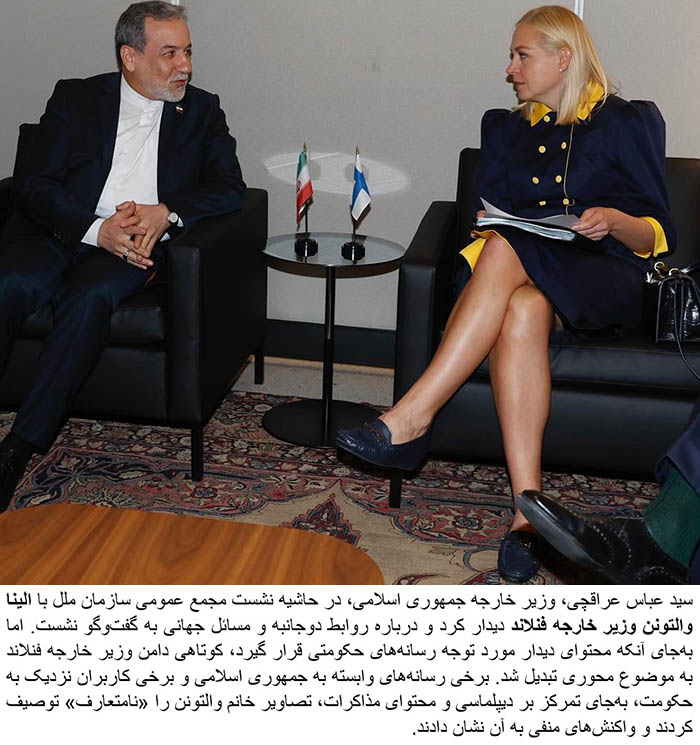
In recent weeks, a diplomatic incident involving Finnish Foreign Minister Elina Valtonen and Iran’s state broadcaster IRIB has sparked intense debate across international media, social platforms, and diplomatic circles. The incident centers around the broadcasting of a meeting between Valtonen and Iranian Foreign Minister Seyyed Abbas Araghchi during the United Nations General Assembly, where IRIB blurred Valtonen’s legs in its televised coverage—a move widely perceived as a form of censorship rooted in Iran’s strict societal and religious norms concerning women’s appearance.
While the meeting itself focused on vital issues such as bilateral relations, regional security, and global diplomacy, the media narrative was overshadowed by controversy surrounding Valtonen’s attire and the censorship of her image. Critics from Western nations, human rights organizations, and feminist groups condemned IRIB’s actions, viewing them as symptomatic of Iran’s broader restrictions on women’s visibility and rights.
Elina Valtonen responded publicly to the censorship, describing IRIB’s actions as “sad” and a reflection of Iran’s ongoing restrictions on women. She emphasized her commitment to women’s rights, her refusal to change her attire based on cultural expectations, and her ongoing discussions on gender equality with Iranian officials.
This incident highlights critical issues surrounding media censorship, gender rights in Iran, and the complex dynamics of international diplomacy. It raises questions about the role of media in shaping perceptions, the treatment of women in restrictive societies, and the impact of such incidents on diplomatic relations with Western countries.
This comprehensive analysis explores the incident from multiple angles, including the background of Iran’s media practices, the implications for women’s rights, reactions from global leaders, and the broader geopolitical consequences. Through this, we aim to understand the deeper issues at play and their significance in the evolving landscape of international relations.