9 Famous Celebrity Love Stories That Captivated the World
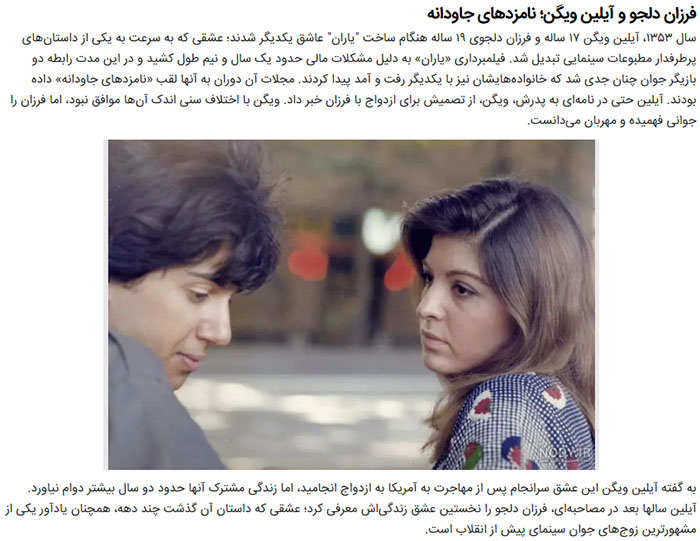
2. Aileen Vigen and Farzan Deljoo: The Young Couple Remembered by Iranian Cinema Fans
Aileen Vigen and Farzan Deljoo belong to the history of Iranian cinema before the Revolution, a period in which young actors frequently became subjects of entertainment-magazine coverage.
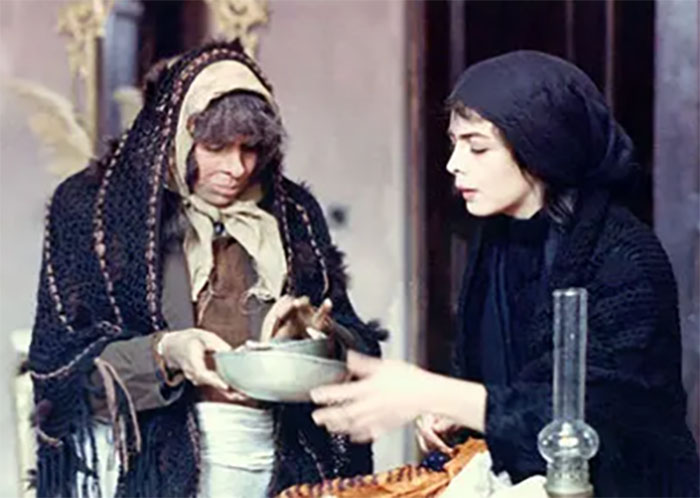
Their reported romance developed around their work on Yaran, a film whose prolonged production reportedly gave the young performers considerable time together.
Stories about their relationship describe the pair as an unusually devoted young couple. The expression “eternal fiancés,” reportedly used in entertainment coverage, captures the way their relationship became part of their public image.
As with many celebrity stories from this period, individual details should be checked against original interviews and contemporary reporting. Nevertheless, the narrative provides an interesting example of how young performers’ personal lives could become extensions of their on-screen popularity.
Who Was Aileen Vigen?
Aileen Vigen is associated with the Iranian entertainment world through her family background and her work in cinema.
She was the daughter of Vigen, the celebrated Iranian singer and actor often remembered as the “Sultan of Jazz” in Persian popular culture.
Vigen played an important role in introducing and popularizing Western-influenced musical styles in Iran. His career connected traditional Persian musical sensibilities with international popular music and helped shape the development of modern Iranian entertainment.
Growing up within such a family meant that Aileen was connected to a cultural environment in which music, cinema, public recognition, and artistic identity frequently overlapped.
Her reported relationship with Farzan Deljoo attracted attention partly because of this background and partly because young celebrity romances were a popular subject for Iranian entertainment publications.
Farzan Deljoo and the World of Pre-Revolution Cinema
Farzan Deljoo became associated with Iranian film culture during the 1970s. His reported relationship with Aileen Vigen developed while the two were connected through the production of Yaran.
Film productions can create unusually close working relationships. Actors may spend long periods rehearsing, filming, traveling, and working with the same small group of people.
In an industry where performers are often photographed together and interviewed about their projects, a personal connection can quickly become a subject of public fascination.
The production of Yaran reportedly continued for approximately a year and a half because of financial difficulties. Accounts of the relationship suggest that the extended production period contributed to the development of a serious romance.
The story illustrates how a film set can become a place where professional collaboration and personal relationships develop alongside one another.
Why Were They Called the “Eternal Fiancés”?
The nickname reportedly reflected the impression that the couple’s relationship was serious and enduring, even before they married.
According to accounts attributed to Aileen, she informed her father of her intention to marry Farzan. Vigen was reportedly concerned about the small age difference between the young couple, although he was also described as regarding Farzan as a kind and understanding person.
Such details offer a glimpse into the family and social expectations surrounding relationships in that period.
Marriage among young entertainers could involve considerations beyond romance. Family approval, financial security, professional ambitions, and public scrutiny all played a role.
The label “eternal fiancés” also demonstrates how entertainment journalism could turn a developing relationship into a recognizable public narrative.
Once a couple acquired a nickname, every new development could be interpreted as another chapter in an ongoing story.
Marriage, Migration, and Separation
Accounts attributed to Aileen Vigen state that the relationship eventually led to marriage after the couple moved to the United States.
The same accounts indicate that the marriage lasted approximately two years.
Their story reflects a broader pattern within the history of Iranian entertainment. Political change, professional uncertainty, and migration reshaped the lives of many artists following the Revolution.
Moving abroad could create new opportunities while introducing financial, cultural, and personal challenges. Couples who had built their relationships within a familiar social environment sometimes faced entirely different circumstances after migration.
It would be inappropriate to attribute the couple’s separation to a specific cause without reliable evidence. Relationships can end for many reasons, and the passage of time does not necessarily make every private detail available to the public.
What remains notable is the way the story continued to be remembered decades later.
Why Cinema Fans Still Remember This Romance
The Aileen Vigen and Farzan Deljoo story combines youth, cinema, family connections, migration, and the transformation of Iranian society.
For audiences interested in pre-revolution Iranian cinema, it provides a personal perspective on a period frequently remembered through its films, music, fashion, and celebrity culture.
The relationship also highlights the importance of oral history. Interviews recorded many years after an event can preserve memories that were never fully documented in contemporary newspapers.
At the same time, memories can change over time, and recollections from different individuals may not always agree. The most responsible account distinguishes personal testimony from independently verified facts.
October 16, 2026 | 6:36 pm