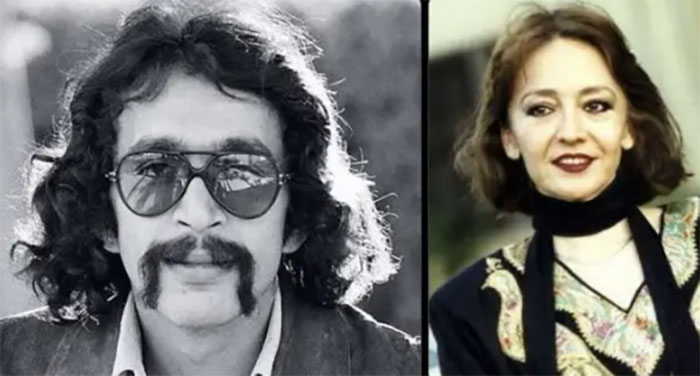
10 Little-Known Stories About Famous Celebrities, Singers, Writers, and Historical Figures
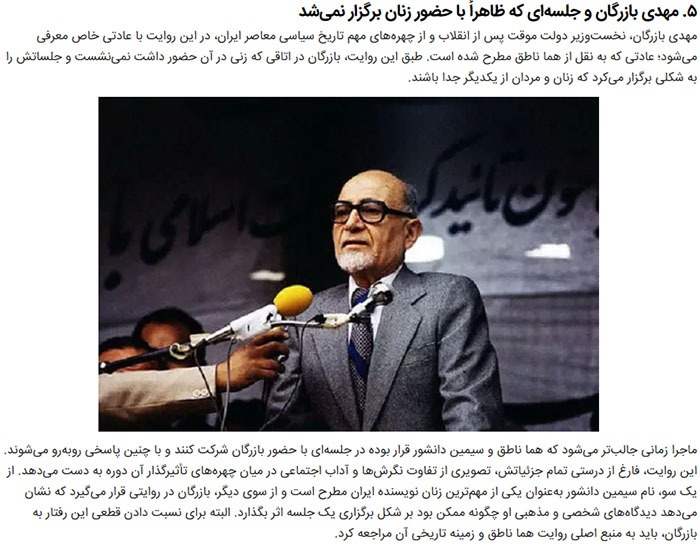
5. Mehdi Bazargan: The Report About Meetings Where Women Were Not Welcome
Mehdi Bazargan was one of the most significant political personalities in modern Iranian history.
An engineer, intellectual, political activist, and religious thinker, he became internationally recognized after serving as the first prime minister of Iran’s provisional government following the 1979 Revolution.
His political career and religious views made him an important figure in discussions about the relationship between religion, politics, and modern Iranian society.
However, an anecdote attributed to historian Homa Nategh presents a lesser-known aspect of Bazargan’s reported personal conduct.
According to the account, Bazargan allegedly preferred not to sit in a room where women were present and arranged certain meetings so that men and women would remain separated.
Who Was Mehdi Bazargan?
Mehdi Bazargan was born in Tehran in 1907.
He studied engineering in France and later became involved in Iranian political and intellectual life.
Before the 1979 Revolution, he was known for his political opposition to authoritarian rule and his involvement in religious-nationalist movements.
Following the revolution, he became prime minister of the provisional government.
His administration faced enormous political challenges during a period of rapid institutional transformation.
Bazargan eventually resigned in November 1979 after the seizure of the American Embassy in Tehran.
He remained an important political figure and continued to participate in public debate until his death in 1995.
Homa Nategh and Simin Daneshvar
The anecdote becomes particularly interesting because it reportedly involved two prominent Iranian women: Homa Nategh and Simin Daneshvar.
Homa Nategh was an Iranian historian and academic whose research focused on modern Iranian history.
Simin Daneshvar was one of the most influential female writers in Persian literature.
Her novel Savushun, published in 1969, is widely regarded as an important work of modern Iranian fiction.
The account suggests that the two women intended to attend a meeting involving Bazargan but encountered the alleged condition concerning the separation of men and women.
Religion, Society, and Cultural Differences
The story provides an opportunity to examine the different social attitudes that existed among influential Iranian personalities.
Iranian intellectual life has historically included a wide range of religious, political, and cultural perspectives.
Even individuals who shared similar political objectives could have very different views on gender relations and social interaction.
Bazargan’s religious outlook was an important part of his political identity, but individual anecdotes should not automatically be treated as definitive descriptions of his overall behavior.
Why This Anecdote Is Interesting
The reported incident is particularly notable because it brings together three important figures from Iranian intellectual history.
Mehdi Bazargan represented a major political and religious tradition.
Homa Nategh was an influential historian.
Simin Daneshvar represented a landmark in modern Persian literature.
Their reported encounter illustrates how different personal beliefs and social expectations could influence interactions among intellectuals.
The story should be verified through the original account attributed to Homa Nategh before its details are treated as established historical fact.
October 30, 2026 | 8:05 pm