10 Little-Known Stories About Famous Celebrities, Singers, Writers, and Historical Figures
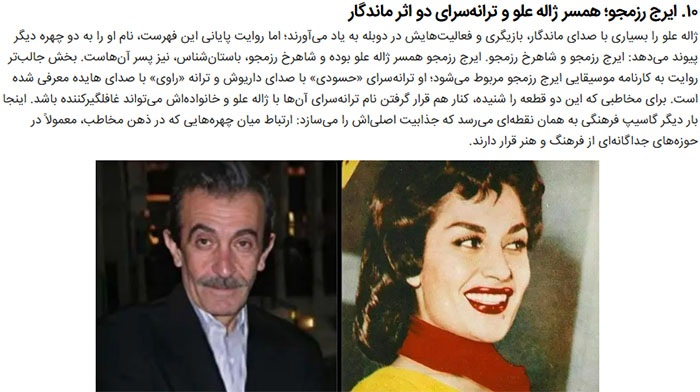
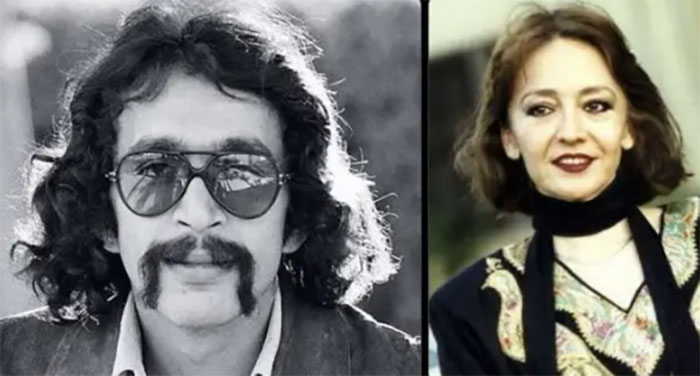
10. Iraj Razmjoo and Zhaleh Olov: The Husband Behind Two Famous Persian Songs
Zhaleh Olov is remembered as one of the important personalities in Iranian performing arts.
Her work extended across acting, radio, voice acting, dubbing, and children’s entertainment.
Her distinctive voice made her recognizable to generations of Iranian audiences.
However, a lesser-known aspect of her personal life concerns her marriage to Iraj Razmjoo and their family connection to archaeologist Shahrokh Razmjoo.
An additional interesting detail is Iraj Razmjoo’s reported contribution to Persian popular music as a lyricist.
He is credited with writing the lyrics for two well-known songs: “Hasoodi,” performed by Dariush, and “Ravi,” performed by Hayedeh.
Who Was Zhaleh Olov?
Zhaleh Olov was born in Tehran in 1927.
She became an established actress, voice artist, and dubbing professional in Iranian entertainment.
Her career included work in cinema, television, radio, and theater.
She was particularly appreciated for her vocal performances and her contribution to Iranian dubbing.
In an era when foreign films and television programs were widely presented to Iranian audiences through Persian dubbing, voice actors played a significant role in the country’s entertainment industry.
Olov’s work helped shape the memories of generations of viewers.
Who Was Iraj Razmjoo?
Iraj Razmjoo is associated with songwriting and lyric writing.
According to the account, he was Zhaleh Olov’s husband and the father of Shahrokh Razmjoo.
His connection to two well-known Persian songs makes his biography particularly interesting to music enthusiasts.
“Hasoodi” by Dariush
Dariush is one of the most recognizable male singers in Persian popular music.
His emotional singing style, distinctive voice, and socially conscious repertoire have made him an influential figure in Iranian music.
“Hasoodi” is among the songs associated with his musical career.
The song’s lyrics and emotional character make it an interesting example of the collaborative relationship between singers, composers, and lyricists.
“Ravi” by Hayedeh
Hayedeh was one of the most celebrated female singers in Persian music.
Her powerful voice and expressive performance style helped establish her as an enduring musical icon.
Her repertoire included emotional ballads, traditional-influenced compositions, and popular songs that continue to be heard among Iranian audiences.
“Ravi” is another song whose lyricist is identified in the account as Iraj Razmjoo.
Shahrokh Razmjoo and the Family Connection
The account also identifies Shahrokh Razmjoo as the son of Zhaleh Olov and Iraj Razmjoo.
Shahrokh Razmjoo is known as an Iranian archaeologist whose professional work belongs to a very different field from his parents’ artistic careers.
This creates an interesting family connection between Iranian performing arts, songwriting, and archaeology.
An Unexpected Link Between Three Cultural Fields
The story is particularly fascinating because it connects several different areas of Iranian cultural life.
Zhaleh Olov represents acting and voice performance.
Iraj Razmjoo is associated with Persian songwriting.
Shahrokh Razmjoo represents archaeology and the study of historical heritage.
The connection between them illustrates how artistic and academic contributions can coexist within the same family.
For fans of Dariush, Hayedeh, Zhaleh Olov, and classic Persian music, discovering the identity of the person behind familiar lyrics can provide a new perspective on songs they have known for years.
Why These Lesser-Known Stories About Iranian Celebrities Matter
The ten stories presented above reveal an interesting dimension of Iranian cultural history.
While famous actors, singers, writers, photographers, and political figures are generally remembered for their public achievements, their personal relationships and lesser-known experiences can offer a more complete picture of the people behind their reputations.
Some of these connections are directly related to artistic collaboration.
Others involve family relationships, personal preferences, political encounters, or unexpected professional circumstances.
Together, they illustrate the interconnected nature of Iranian cultural life.
Iranian Singers and the People Behind Their Famous Songs
One recurring theme is the importance of lyricists and composers in Persian popular music.
Googoosh, Dariush, Hayedeh, Mohammad Nouri, Banan, Marzieh, and Mahasti are recognized by their voices and performances.
However, their musical achievements were also shaped by writers, composers, arrangers, and other creative professionals.
Zoya Zakarian’s reported connection to Googoosh’s repertoire and Iraj Razmjoo’s association with songs performed by Dariush and Hayedeh highlight the importance of the people behind the music.
Similarly, the collaboration between Nader Ebrahimi, Fereydoun Shahbazian, and Mohammad Nouri demonstrates how literature and music can come together to produce enduring cultural works.
Iranian Writers and Their Unexpected Personal Histories
Nader Ebrahimi’s name appears in two different stories.
The first concerns his contribution to the lyrics of a famous patriotic song performed by Mohammad Nouri.
The second concerns his reported family relationship and estrangement from photographer Maryam Zandi.
These accounts show how the public image of an author can represent only one part of a much broader personal and professional history.
Women Who Shaped Iranian Culture
Several of the personalities discussed here are important female figures in Iranian cultural history.
Googoosh, Hayedeh, Mahasti, Marzieh, Sima Bina, Zhaleh Olov, Simin Daneshvar, Maryam Zandi, Forough Farrokhzad, and Zoya Zakarian each contributed to a different area of artistic expression.
Their achievements span music, literature, photography, acting, and cultural documentation.
Their stories also demonstrate the importance of women in shaping modern Iranian popular culture.
The Connection Between Politics and Everyday Life
The stories about Mehdi Bazargan, Behzad Nabavi, and Seyyed Zia ol-Din Tabataba’i offer another perspective.
Political figures are usually studied through their public decisions and historical influence.
However, anecdotes about their social behavior, professional experiences, and personal preferences can reveal more ordinary dimensions of their lives.
These details are interesting precisely because they contrast with the serious public roles for which these individuals are remembered.
Frequently Asked Questions About Famous Iranian Artists and Historical Figures
Who was Zoya Zakarian’s husband?
An account attributed to Parvin identifies Iranian actor Reza Zhian as the husband of lyricist Zoya Zakarian. Their reported relationship connects Iranian theater and television with Persian popular music.
Who wrote the lyrics of the famous Mohammad Nouri patriotic song?
The account identifies Iranian author Nader Ebrahimi as the lyricist. The music was composed by Fereydoun Shahbazian, and the song was performed by Mohammad Nouri.
Were Nader Ebrahimi and Maryam Zandi siblings?
According to the account, Maryam Zandi was Nader Ebrahimi’s sister. It also describes an approximately 20-year estrangement between them. The original statements should be consulted to establish the details.