10 Little-Known Stories About Famous Celebrities, Singers, Writers, and Historical Figures
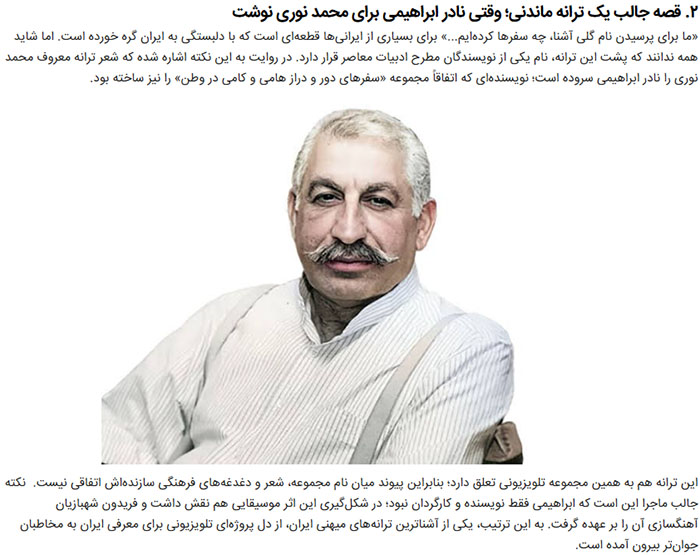
2. Nader Ebrahimi and Mohammad Nouri: The Fascinating Story Behind an Iconic Iranian Patriotic Song
Some songs become much more than musical compositions. They become symbols of national identity, nostalgia, and collective belonging.
One such example is the beloved Persian song beginning with the memorable line:
“How many journeys have we undertaken just to ask the name of a familiar flower…”
For many Iranians, this song evokes powerful feelings of affection for Iran. Its poetic language, memorable melody, and emotional performance have made it an enduring part of the country’s musical heritage.
The story behind the song is especially interesting because its lyrics were written by Nader Ebrahimi, one of the influential figures in contemporary Iranian literature.
The song was performed by Mohammad Nouri, whose voice became closely associated with some of the most memorable compositions in Persian music.
Who Was Nader Ebrahimi?
Nader Ebrahimi was an Iranian author, screenwriter, filmmaker, and cultural figure whose creative work covered several different artistic fields.
Born in Tehran in 1936, Ebrahimi developed a distinguished career in literature and filmmaking. His works included novels, short stories, children’s literature, screenplays, and television projects.
He was particularly interested in Iranian culture, history, identity, and the relationship between individuals and their surroundings.
His literary style often combined philosophical reflection, emotional storytelling, and an interest in the cultural characteristics of Iranian society.
Among his well-known works is the television series The Long and Far-Flung Journeys of Hami and Kami in the Homeland.
The series introduced audiences to different aspects of Iran and its cultural and geographical diversity.
The Connection Between the Song and the Television Series
According to the account, the famous song performed by Mohammad Nouri originated within the same television project.
This connection makes the composition even more interesting.
Rather than being an unrelated patriotic song, it was associated with a creative project intended to introduce Iran to younger audiences.
The lyrics, therefore, were closely connected to the central theme of the series: discovering the country, understanding its identity, and appreciating its natural and cultural heritage.
Nader Ebrahimi’s contribution extended beyond writing. The account also associates him with the development of the musical work.
The composition was created by Fereydoun Shahbazian, a highly respected Iranian composer and music director.
Mohammad Nouri’s Memorable Performance
Mohammad Nouri was one of the most distinctive male voices in Iranian music.
His musical background, vocal training, and expressive performance style helped him develop a unique position within Persian popular and classical-influenced music.
Unlike many singers whose popularity was primarily connected to commercial pop productions, Nouri became particularly respected for the artistic and cultural character of his repertoire.
His interpretation of this patriotic composition gave the lyrics a memorable musical identity.
The collaboration between Nader Ebrahimi, Fereydoun Shahbazian, and Mohammad Nouri represents an interesting example of how literature, television, and music can come together to create a lasting cultural work.
Why This Story Remains Important
The connection between Nader Ebrahimi and Mohammad Nouri demonstrates that some of Iran’s most familiar songs have literary origins that are not widely recognized.
It also highlights the importance of television productions in introducing music to new generations.
For anyone interested in Iranian patriotic songs, Mohammad Nouri’s music, Nader Ebrahimi’s books, or the history of Persian television, this is an especially fascinating cultural connection.
October 30, 2026 | 8:05 pm