US State Department Arrests Relative of Qassem Soleimani: Immigration Crackdown, National Security Concerns
Introduction
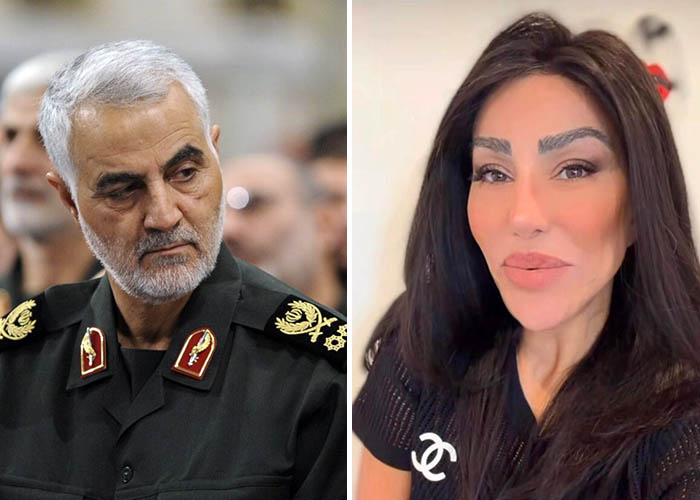
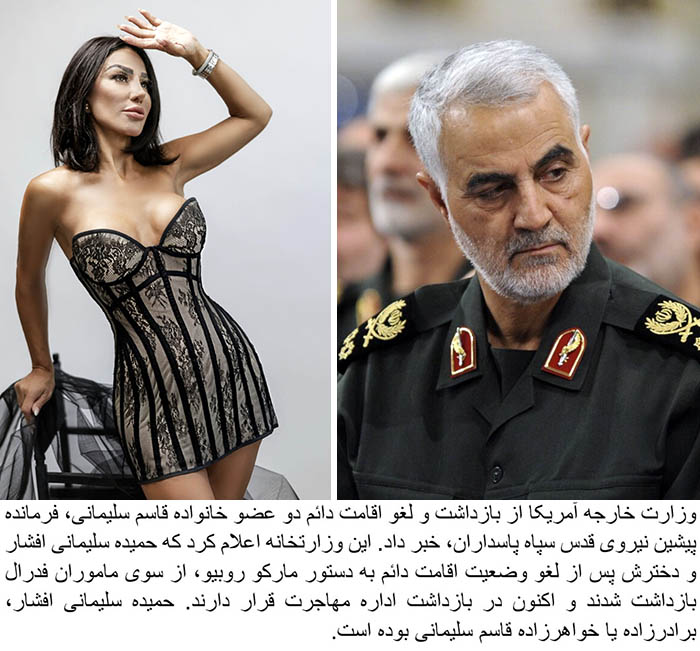
The recent announcement by the United States Department of State regarding the arrest and revocation of permanent residency for relatives of Qassem Soleimani has sparked widespread debate across political, legal, and international relations circles. The case centers on Hamida Soleimani Afshar and her daughter, who were taken into custody by federal authorities after their lawful permanent resident status was rescinded under the direction of Marco Rubio.
This development highlights growing tensions between the United States and Iran, particularly regarding individuals allegedly connected to the Iranian regime or its military branches such as the Islamic Revolutionary Guard Corps (IRGC), which has been officially designated as a terrorist organization by the US government.
One of the more striking elements of the case is the reported lifestyle of Soleimani Afshar in Los Angeles. According to various reports, her social media posts depicted a life of comfort and luxury in the United States. This has been highlighted by officials as a contradiction—someone allegedly critical of the US while simultaneously benefiting from living within it.
This narrative has fueled public debate. Supporters of the government’s actions argue that individuals who enjoy the privileges of living in the United States should not simultaneously support regimes or organizations that oppose it.
On the other hand, critics argue that such reasoning oversimplifies the complexity of identity and political belief. Many immigrants maintain strong connections to their home countries and may hold views that are critical of US policies without posing any actual threat.
Historical Context: US Actions Against Iranian-Linked Individuals
The arrest of Hamida Soleimani Afshar is not an isolated incident but part of a broader historical pattern of US actions targeting individuals linked to the Iranian government. Since the Iranian Revolution, relations between the United States and Iran have remained deeply strained. Over the decades, multiple administrations have imposed sanctions, travel bans, and legal restrictions on Iranian officials, affiliates, and, in some cases, their extended networks.
The designation of the Islamic Revolutionary Guard Corps (IRGC) as a terrorist organization marked a turning point in US foreign policy. It expanded the scope of enforcement beyond direct actors to include individuals accused of providing indirect or ideological support. This classification allows US authorities to take action not only against financial or operational links but also against public endorsements that may be interpreted as encouragement of hostile activities.
This broader interpretation of “support” has created a legal environment where even statements made on social media platforms can carry serious consequences.