The Legacy and Family Roots of Trita Parsi: A Reflection of History and Identity
Early Life and Family Background
Born in Iran and Migration to Sweden
Trita Parsi was born in Ahvaz, Iran, on July 21, 1974. His early life was marked by political upheaval and family activism. His father, Dr. Touraj Parsi, was a university professor at Jondi-Shapoor University of Ahvaz, deeply involved in Iran’s political struggles. His father’s activism and opposition to oppressive regimes led to his imprisonment, first under Shah Mohammad Reza Pahlavi and later after the Iranian Revolution under Ruhollah Khomeini.
In 1978, when Trita was just four years old, his family moved from Iran to Sweden to escape political repression, seeking safety and stability. This migration helped shape Trita’s dual identity as both Iranian and Swedish and influenced his perspectives on exile, politics, and diplomacy.
Family Lineage and Historical Roots
The Parsi family has a complex and historically significant background rooted in Iran’s rich cultural and political history. Notably, Trita Parsi’s familial lineage is intertwined with notable figures and historical events that have shaped Iranian history.
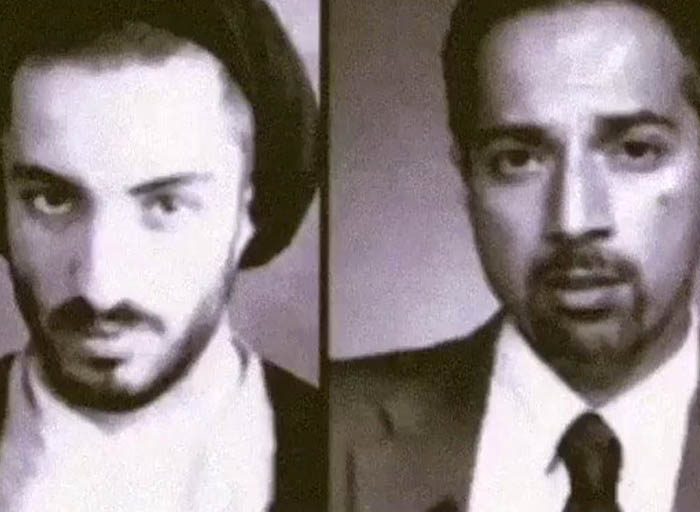
Seyyed Mojtaba Mirlohi, also known as Mojtaba Navab Safavi, was a prominent figure in Iran’s political landscape. He was the leader of the Fedayeen-e-Islam, a militant Islamic organization active during the early 20th century, and is infamously associated with the assassination of prominent Iranian intellectual Ahmad Kasravi.
Contrary to some misconceptions, Seyyed Mojtaba Mirlohi did not have any sons. Instead, he was survived by three daughters: Zahra Mirlohi, Sedigheha Mirlohi, and Fatemeh Mirlohi. These daughters received religious seminary education in Iran and later pursued further studies abroad in Europe and America.
Family’s Academic and Political Pursuits
After completing their religious seminary studies in Iran, all three daughters of Mojtaba Mirlohi migrated to Europe and the United States to continue their education. Their pursuit of knowledge in Western countries reflects a family tradition of scholarly engagement and political activism, with a focus on religious, cultural, and political issues affecting Iran and the broader Middle East.
Name Changes and Concealed Lineage
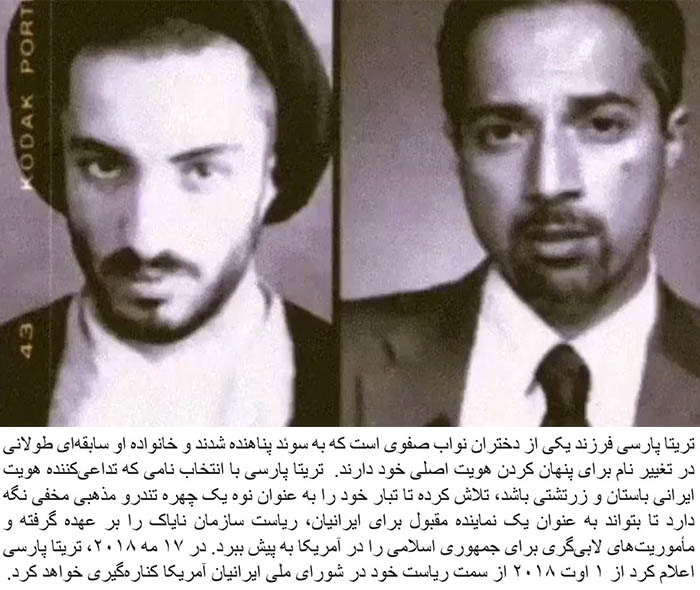
The Mirlohi family, like many families with complex political histories, adopted name changes over generations to conceal their true identities and political affiliations. Some sources suggest that the family changed their last names to evade political persecution and to protect their members from repression.
Trita Parsi’s family history is thus intertwined with Iran’s turbulent political past, including associations with extremist figures and revolutionary movements. These connections have been a subject of controversy and debate, often obscured by efforts to present a different public persona.
February 6, 2026 | 6:49 pm