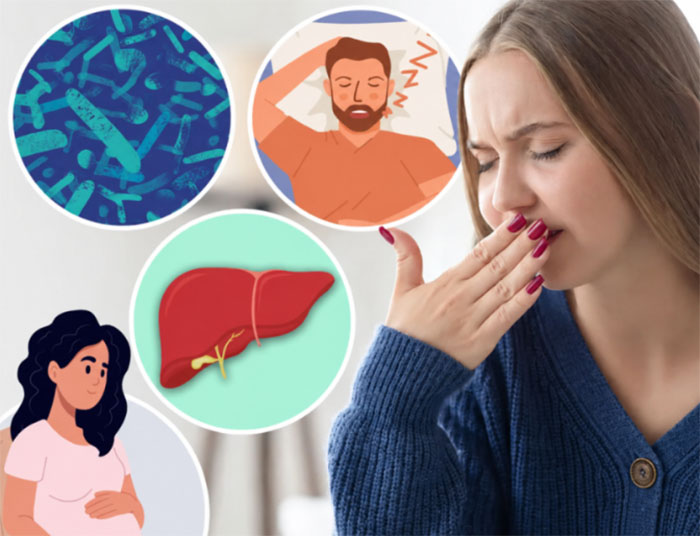
What Does a Strange Taste in Your Mouth Mean?
Dry Mouth During Menopause
Hormonal changes during menopause may be associated with changes in oral comfort, dryness, and burning sensations.
However, dry mouth has many potential causes, and it should not automatically be attributed to menopause.
Persistent dryness, difficulty eating, recurrent oral infections, or increasing dental problems warrant a dental or medical assessment.
Mouthwashes containing alcohol may worsen dryness for some people. A dentist or pharmacist can help select an appropriate product.
6. Can Vitamin Deficiencies Cause a Strange Taste in the Mouth?
Nutritional deficiencies can affect the mouth, tongue, nervous system, and sense of taste. Iron, vitamin B12, and zinc are particularly relevant when evaluating certain taste-related symptoms.
However, taste changes are nonspecific. They can occur in people who have adequate nutrition, so a strange taste does not automatically indicate a deficiency.
Iron Deficiency
Iron is essential for producing hemoglobin, the protein in red blood cells that carries oxygen.
Iron deficiency can occur because of blood loss, inadequate intake, increased requirements, or impaired absorption.
Possible symptoms include fatigue, weakness, headaches, pale skin, reduced exercise tolerance, and shortness of breath during activity. Some people experience a sore tongue or changes in the mouth.
A metallic taste may occur in association with other oral or nutritional changes, but it is not sufficient to diagnose iron deficiency.
A clinician may recommend a complete blood count and ferritin or other iron studies.
People with unexplained iron deficiency may need further investigation to identify the cause, especially if there is ongoing blood loss.
Vitamin B12 Deficiency
Vitamin B12 supports red blood cell production and normal nervous system function.
Deficiency can occur because of dietary limitations, absorption problems, certain gastrointestinal conditions, or medications and other factors.
Symptoms may include fatigue, weakness, a sore or smooth tongue, mouth discomfort, numbness, tingling, balance difficulties, or memory and concentration problems.
Not everyone experiences the same symptoms, and neurological problems can occur even when anemia is absent.
If vitamin B12 deficiency is suspected, medical assessment and appropriate testing are preferable to taking high-dose supplements without a clear reason.
October 22, 2026 | 10:08 pm