Religious and Nationalist Rhetoric
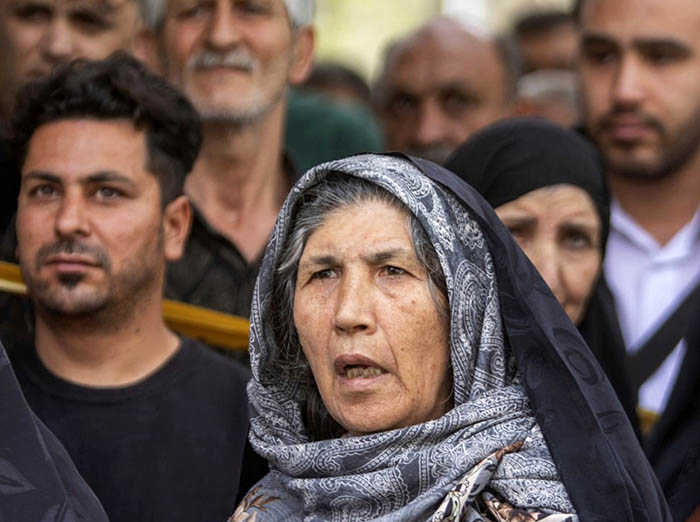
A woman holding a picture of Iran’s Supreme Leader Ayatollah Ali Khamenei, seen during the 2026 anniversary festivities, symbolizes the regime’s reliance on religious authority and nationalist fervor. The image signifies the ongoing veneration of the current leadership, linking the revolutionary past with the present regime’s legitimacy.
Mass Participation and Collective Identity
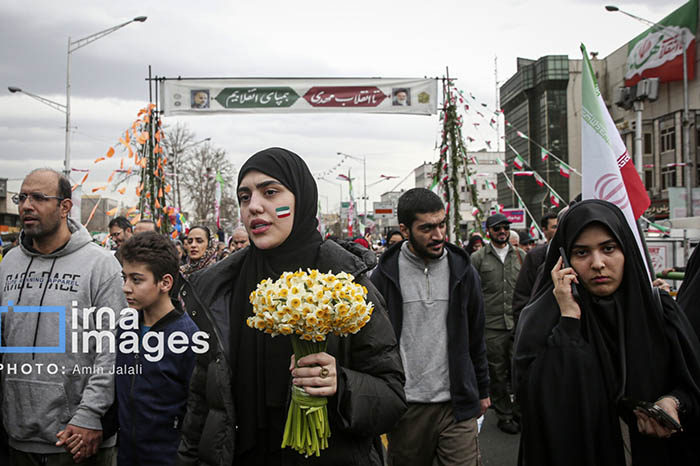
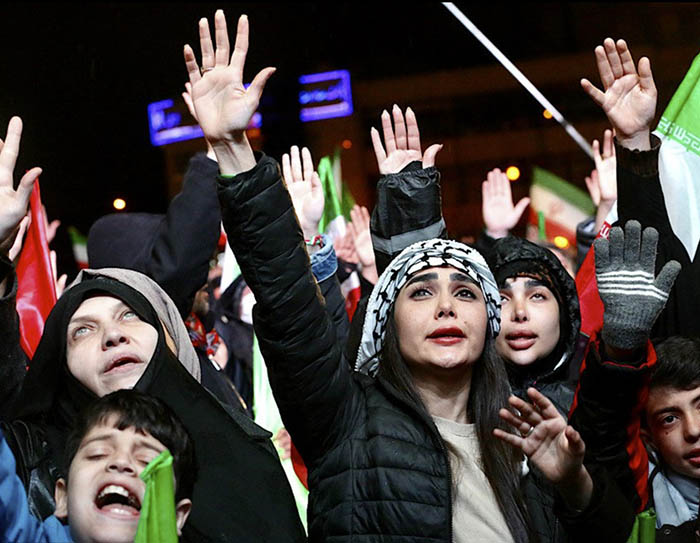
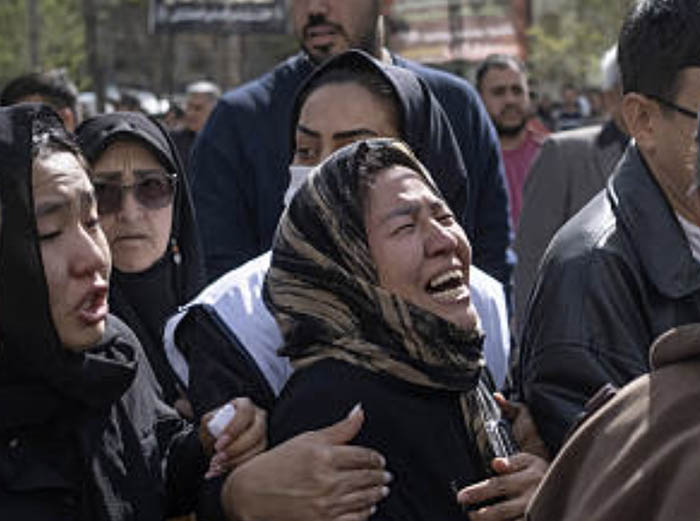
Hundreds of citizens gather at Tehran’s Azadi Square to participate in the anniversary celebrations. The large turnout showcases the regime’s ability to mobilize mass participation, fostering a sense of collective identity rooted in revolutionary ideals. The display of banners, flags, and slogans often highlights themes of resistance, sovereignty, and divine guidance.
Anti-Western Demonstrations
A striking feature of the anniversary rallies is the display of mock coffins representing serving and retired U.S. military leadership. These symbolic coffins, displayed along the route of the rally, serve as potent propaganda tools, emphasizing Iran’s stance against foreign interference and portraying the United States as an enemy of the revolution and national sovereignty. This imagery reinforces the regime’s narrative that Iran remains resilient against external threats and conspiracies.
Propaganda and Messaging
Throughout the celebrations, official speeches, media coverage, and public displays focus on themes of independence, resistance, and revolutionary continuity. The regime’s leadership frames the anniversary as a testament to the resilience of the Islamic Revolution, emphasizing that despite internal challenges and external pressures, the revolution’s ideals remain alive and vital.