Rehearsals for a Revolution: Pegah Ahangarani Brings Her Documentary to TIFF 2026
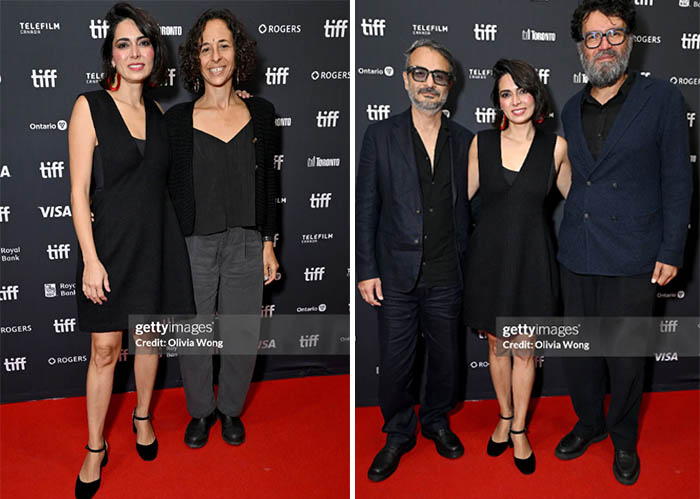
Arash Ashtiani’s Role in the Documentary
Arash Ashtiani is an Iranian-British actor and filmmaker whose work has increasingly connected Iranian stories with international cinema.
For Rehearsals for a Revolution, his role extends beyond appearing at festival events. Official film credits identify Ashtiani as editor and co-writer, while other production materials identify him as a producer.
Editing is especially important in a documentary built from archival material.
A film based on decades of history must determine how photographs, home videos, interviews, recordings, news material and contemporary footage can be assembled into a coherent narrative. In Rehearsals for a Revolution, this process is central to the film’s storytelling approach.
The documentary does not simply rely on newly filmed interviews. Instead, it works with material accumulated over many years.
That makes editing a form of historical construction.
A family recording that originally existed as a private memory can acquire a different meaning when placed beside historical footage. A newspaper image can become connected to an individual’s experience. A voice recording can bridge different periods of time.
Through this structure, the documentary creates connections between the intimate and the historical.
The Importance of Personal Archives in Rehearsals for a Revolution
One of the defining characteristics of Rehearsals for a Revolution is its use of personal archives.
According to the film’s official descriptions, Ahangarani draws on family footage, personal archives, home videos, protest footage, newspapers and recorded voices.
Personal archives can provide a different perspective from conventional historical records.
A historical event might be remembered through dates, official documents and political speeches. A family may remember the same event through a photograph, a conversation, a missing relative, a recording or a moment captured on a home video camera.
For Ahangarani, these materials become part of a larger portrait of Iran.
The approach also reinforces the title of the documentary.
The word “rehearsals” suggests repetition, preparation and unfinished attempts. Rather than presenting history as a completed sequence, the film examines cycles of hope, political change, repression, disappointment and renewed expectations.
The film’s official synopsis describes Iran as a country marked by political repression and a persistent hope for revolution.
Rehearsals for a Revolution and the History of Iran
The historical scope of the documentary is unusually broad.
It begins around the 1979 Iranian Revolution and follows more than four decades of Iranian history.
For viewers outside Iran, this period encompasses several major chapters in the country’s modern history, including the aftermath of the revolution, the Iran-Iraq War, political and social transformations, different periods of reform and conservatism, protest movements and changes in Iranian society.
The film does not attempt to function as a conventional textbook history of Iran.
Instead, its structure is personal.
Ahangarani uses the lives of relatives and mentors as entry points into larger historical questions. The film’s five portraits are therefore not simply biographies. They are ways of examining how people experience historical change.
This distinction is important when considering Rehearsals for a Revolution as a documentary.
It is simultaneously a family documentary, historical documentary, personal documentary and political documentary, although its primary method is personal storytelling.
The Cannes description similarly presents the film as a combination of intimate and collective memory.
September 22, 2026 | 11:05 am