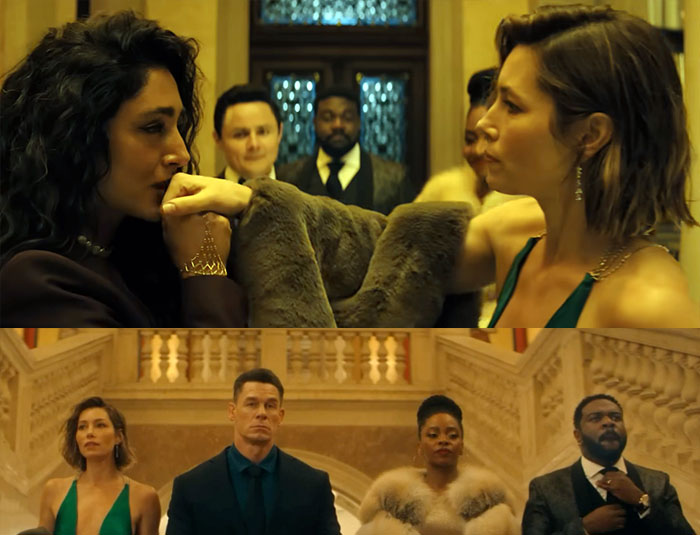
John Cena and Golshifteh Farahani’s Matchbox Movie Faces Backlash as Critics Question the Apple TV Action Film
Why Critics Have Questioned the Matchbox Story
The central criticism of Matchbox concerns the relationship between its commercial inspiration and its narrative.
Matchbox miniature cars are familiar consumer products, but a toy brand does not necessarily arrive with an established fictional world, complex characters, or a natural dramatic conflict.
A filmmaker adapting such a property must build those elements from the ground up. The challenge is to make the finished story feel like a meaningful creative interpretation rather than an extended advertisement.
According to the supplied report, some critics felt that the miniature cars served primarily as a pretext for the action rather than an integral part of a distinctive story.
This criticism touches on a broader issue in franchise filmmaking. A recognizable name can help a production attract initial attention, but familiarity alone does not guarantee a compelling movie.
Audiences typically expect a film to offer a reason to care about its characters. They want to understand the central conflict, experience meaningful developments, and see events unfold in a way that feels connected to the film’s world.
When a movie’s premise appears to have been developed mainly around a commercial property, the relationship between the product and the narrative can become difficult to ignore.
The result may feel familiar without being memorable. Car chases, international travel, dangerous missions, and accusations of wrongdoing can all be effective storytelling devices, but they require a distinctive combination to stand out.
The criticism of Matchbox suggests that some reviewers were unconvinced that the film had found that combination.
The New York Times Questions the Premise Behind Matchbox
The supplied report notes that The New York Times questioned the idea of building a feature film around a brand that lacks an inherent narrative identity.
The broader issue is not whether a toy company can inspire a successful movie. Numerous adaptations have demonstrated that commercial products can become the foundation for engaging cinematic worlds.
Rather, the question is what the filmmakers add to the original property.
A miniature car can inspire stories about exploration, competition, engineering, childhood memories, adventure, or imaginative play. However, those possibilities must be developed into characters and situations that can sustain a feature-length narrative.
If the brand remains primarily a recognizable name attached to a conventional action plot, viewers may struggle to understand why that particular property needed a film adaptation.
This challenge becomes more pronounced when the movie uses a familiar action formula. A story about a group of people trying to clear their names can provide a workable foundation, but the film must find a distinctive way to develop the premise.
A strong adaptation usually creates a relationship between the source material and the movie’s dramatic ideas. The original property becomes part of the story’s identity rather than merely a marketing label.
The criticism described in the report suggests that Matchbox faced difficulties establishing that relationship.
The question is particularly important because audiences have become familiar with entertainment franchises that extend across toys, films, games, and merchandise. Viewers may recognize the brand immediately, but they also expect the film to offer an experience that goes beyond the product itself.
October 12, 2026 | 9:09 pm