6 Signs of Heart Disease That May Appear on the Face: From Earlobe Creases to Facial Redness
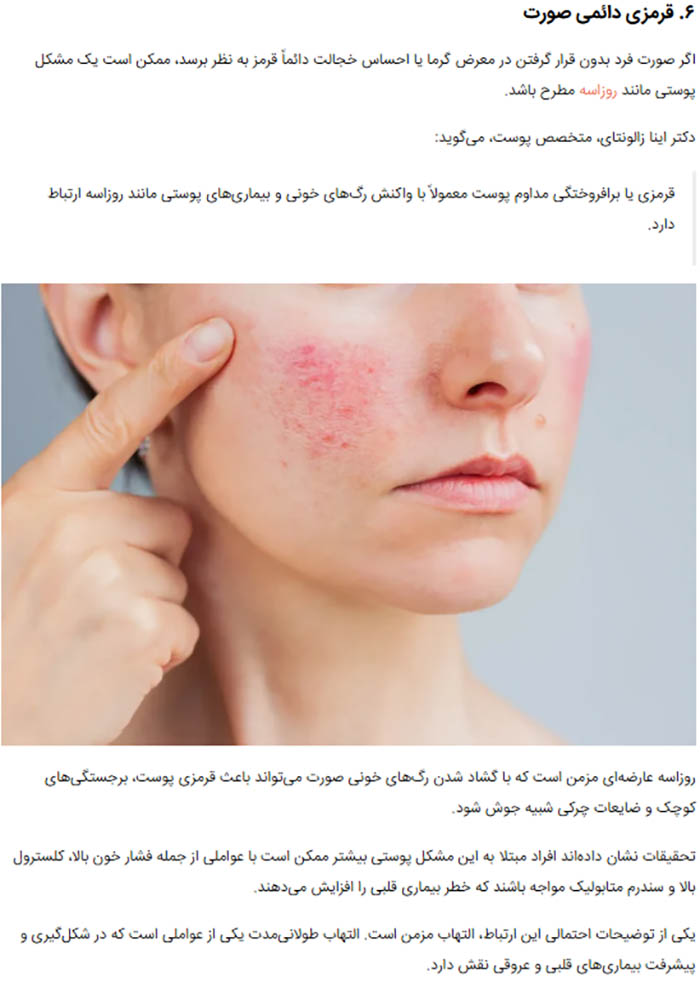
6. Persistent Facial Redness and Flushing
Another visible change sometimes discussed in connection with heart disease and facial symptoms is persistent redness.
A person’s face can temporarily become red after exercise, embarrassment, heat, spicy food or alcohol. That type of flushing is generally very different from chronic facial redness.
Persistent redness can occur with rosacea, a common chronic skin condition that frequently affects the cheeks, nose, chin and forehead.
What does rosacea look like?
Depending on the person, rosacea can cause:
- Persistent redness
- Recurrent flushing
- Visible small blood vessels
- Burning or stinging
- Small bumps
- Pus-filled lesions
- Skin sensitivity
- Eye symptoms in some people
The condition can come and go, with periods when symptoms are more noticeable.
Is facial redness a symptom of heart disease?
Usually, persistent facial redness has a dermatological rather than cardiac explanation.
Rosacea itself should not be interpreted as proof of coronary artery disease.
Researchers have nevertheless investigated whether rosacea and cardiovascular conditions may share certain underlying risk factors.
These may include:
- Chronic inflammation
- Metabolic abnormalities
- High blood pressure
- Abnormal cholesterol
- Insulin resistance
- Lifestyle-related risk factors
The relationship is still an area of scientific investigation.
Therefore, someone with rosacea should not assume that their facial redness means that their arteries are blocked.
Why is inflammation relevant?
Inflammation plays a role in many biological processes.
Atherosclerosis is not simply a matter of cholesterol physically accumulating inside an artery. It involves complex interactions between lipids, blood vessel cells, immune responses and inflammation.
Chronic inflammatory processes have therefore attracted considerable interest in cardiovascular research.
But an association between an inflammatory skin disorder and cardiovascular risk factors does not mean that the skin condition directly causes heart disease.