Coffee Under Fire: The Resilience of Café Culture in Tehran During Wartime
Endurance as a Collective Practice
Ultimately, the persistence of café culture in Tehran during wartime reflects a collective practice of endurance. It is not the result of individual actions alone, but of shared commitments—by owners, staff, and patrons alike. Each participant contributes to the maintenance of these spaces, reinforcing their significance.
Endurance, in this context, is active rather than passive. It involves continuous adaptation, negotiation, and care. Cafés become sites where this process is visible, where the abstract concept of resilience takes tangible form.
Final Continuation: The Quiet Pulse of a Living City
As the days of conflict continue, Tehran’s cafés remain part of the city’s quiet pulse. They do not dominate headlines or define strategic outcomes, yet they sustain something equally vital—the human capacity to connect, to reflect, and to persist.
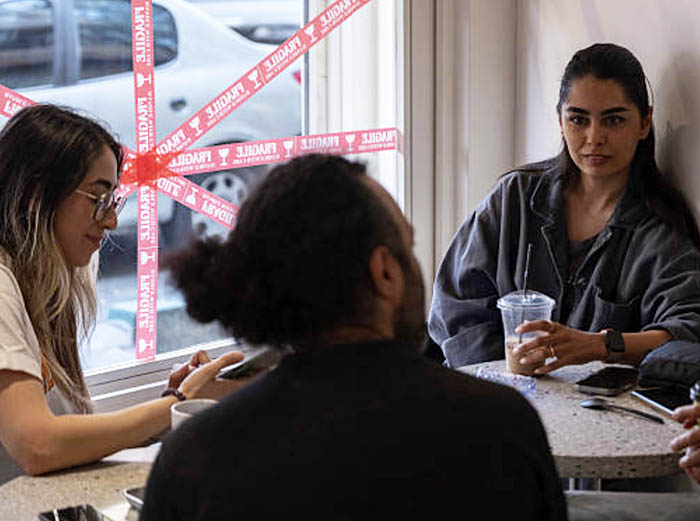
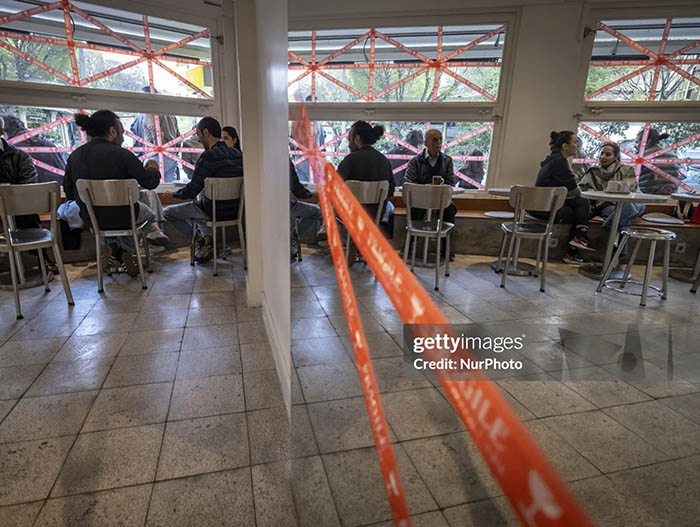
Within their walls, beneath taped windows and subdued lights, life unfolds in small, meaningful ways. Conversations continue, coffee is brewed, and moments are shared. These acts, though modest, carry profound significance. They affirm that even in the midst of uncertainty, the essence of urban life endures—steady, adaptive, and deeply human.
The image of a café window taped against potential shockwaves encapsulates the essence of Tehran’s coffee culture during wartime. It is a symbol of vulnerability, but also of preparation and persistence. Inside these cafés, life continues—not unchanged, but unbroken.
In a world often defined by large-scale events and dramatic narratives, these small spaces offer a different perspective. They remind us that resilience is not always loud or visible. Sometimes, it is found in quiet conversations, shared cups of coffee, and the simple act of showing up.
Tehran’s cafés, with their taped windows and steady rhythms, stand as testaments to this quieter form of strength.