Introduction
The Middle East has entered one of its most dangerous moments in decades after the United States and Israel launched coordinated military strikes against Iran on February 28, 2026, dramatically escalating the long-standing tensions between the three powers. The strikes targeted Iranian military infrastructure, missile facilities, and positions linked to the Islamic Revolutionary Guard Corps (IRGC).
According to multiple international reports, the operation involved precision airstrikes, cyber warfare tactics, and intelligence-driven targeting, marking the most significant direct confrontation between Iran and the U.S.–Israel alliance in modern history.
The attack has already triggered a chain reaction across the region.
Iran responded swiftly by launching waves of ballistic missiles and drones toward Israel, while also threatening U.S. bases and allied military installations in the Middle East. Several regional countries have raised their military readiness levels amid fears that the confrontation could spiral into a large-scale Middle East war.
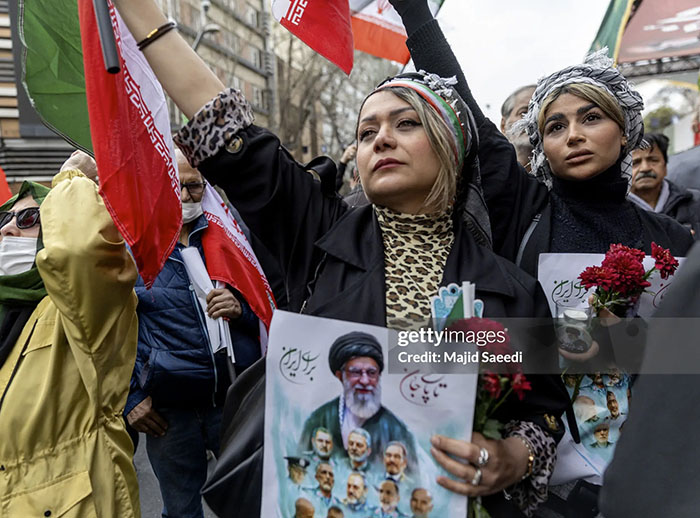
The situation escalated further on March 11, 2026, when thousands of Iranians gathered in Tehran for the funeral ceremonies of military commanders killed in the strikes. The funeral procession at Enghelab Square drew massive crowds, many carrying Iranian flags and portraits of the country’s supreme leaders while chanting slogans against the United States and Israel.
Images from the ceremony showed coffins of senior military officials, members of the Revolutionary Guards, and civilians—including children—who were reportedly killed in the attacks.
The developments have sparked widespread international concern, with world leaders warning that the conflict could threaten global security, disrupt energy markets, and destabilize the entire Middle East.